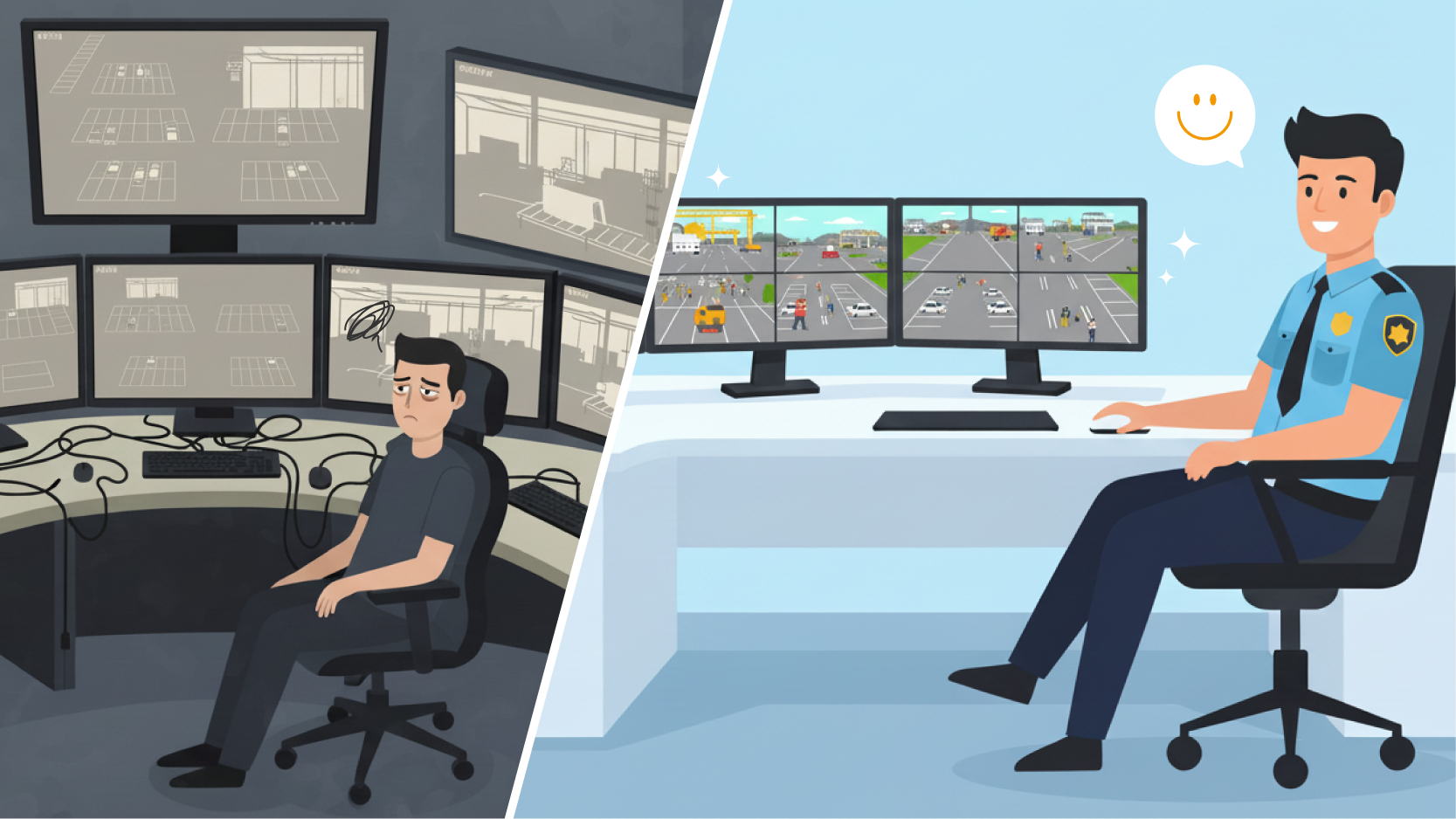
In surveillance environments, timing is not a technical footnote. It is part of the decision itself.
When operators rely on live video to assess movement, verify incidents, or respond to threats, even a small delay can change what they see and how they act. This is why SDI continues to matter. Originally developed for broadcast applications where frame accuracy and signal integrity were essential, SDI has become a long-standing standard in professional monitoring environments that depend on real-time visual feedback.
For system integrators, security teams, and infrastructure planners, understanding SDI is not simply about learning a video format. It is about understanding why certain monitoring systems still prioritise direct, stable, low-latency video transmission over more flexible but more complex alternatives.
In modern surveillance, SDI remains relevant for one core reason: it supports real-time monitoring in a way that is predictable, reliable, and operationally practical.
SDI, or Serial Digital Interface, is a family of digital video transmission standards defined by the Society of Motion Picture and Television Engineers (SMPTE). It is designed to transmit uncompressed digital video signals over 75-ohm coaxial cable, typically using BNC connectors.
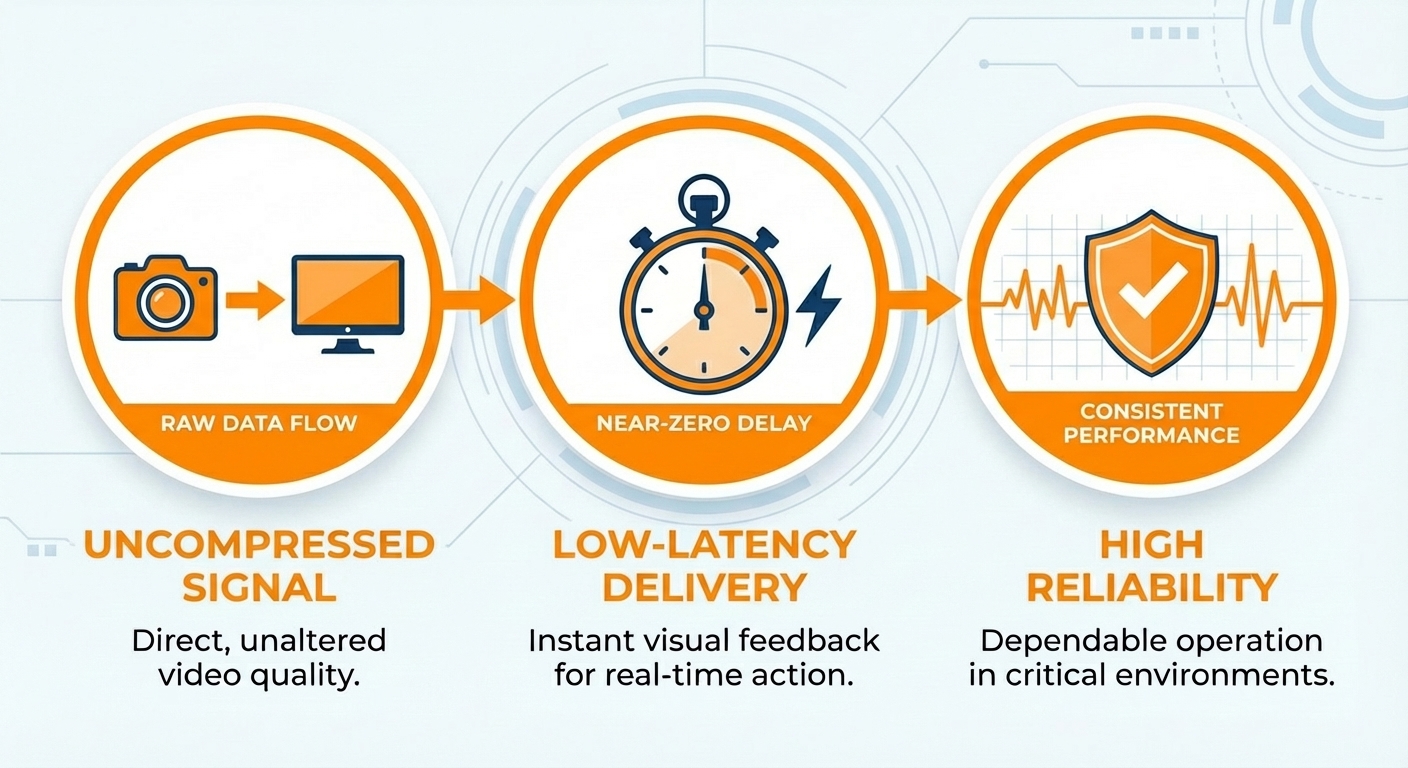
In practical terms, SDI allows video to travel directly from the source to the display or receiving device without the compression, packetisation, or network processing that commonly occurs in IP-based systems. Because of this direct signal path, SDI is widely associated with near-zero latency, stable signal integrity, and consistent video performance.
That definition matters because in professional monitoring, the technical design of the signal path affects operational reality. If a monitoring system depends on real-time visibility, the interface is not just a connector choice. It is part of the monitoring strategy.
Key definition:
SDI (Serial Digital Interface) is a professional digital video transmission standard that uses coaxial cabling to deliver uncompressed video with near-zero latency. It is commonly used in real-time monitoring environments where signal stability, immediate visual feedback, and predictable performance are critical.
In practical terms, SDI is designed for one purpose:
to ensure that what is captured is displayed immediately and accurately.
SDI first gained prominence in the broadcast industry, where video quality, synchronisation, and signal stability were non-negotiable. Production teams needed to move high-quality video from cameras to switching systems and displays without delay or degradation. Broadcast workflows could not tolerate inconsistent frame timing or unstable transmission.
Those same requirements also exist in surveillance and professional monitoring.
In a control room, train station, industrial facility, or healthcare environment, the need is different in context but similar in principle: operators must see what is happening as it happens. The system must remain stable over long hours. The video path must not introduce unnecessary delay. The signal must remain dependable across professional deployment conditions.
This is where SDI moved naturally from broadcasting into surveillance. It was not adopted because it was fashionable. It was adopted because it already solved a problem that surveillance teams also had: how to maintain real-time visual truth.
As image requirements increased, SDI evolved to support higher resolutions and faster frame rates. Understanding these standards helps explain why SDI remains adaptable in modern monitoring environments.
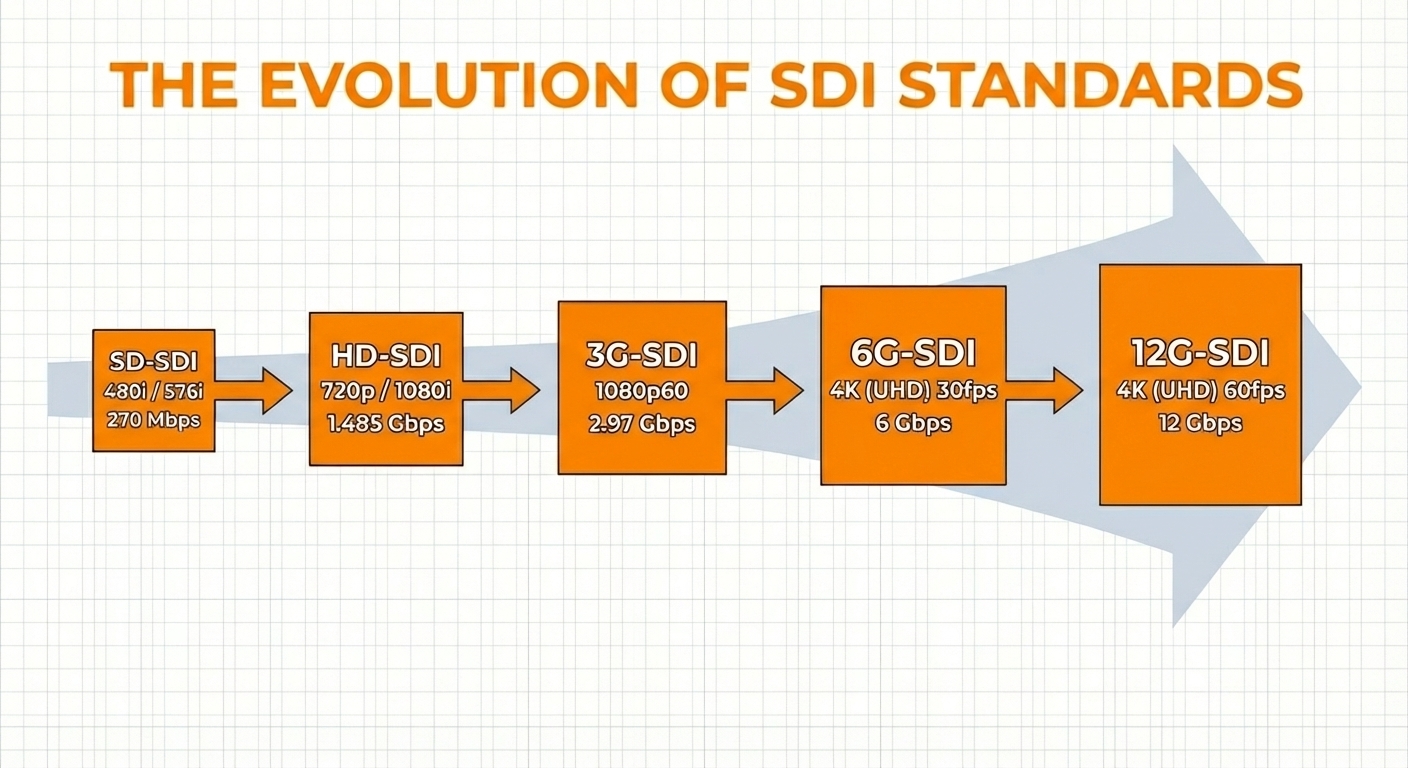
The technical evolution of SDI is important, but the larger point is this: SDI did not remain relevant by staying static. It evolved alongside professional monitoring requirements while preserving its core strength—reliable real-time transmission.nt:
they all deliver video in real time, without relying on network conditions.
| Standard | Resolution Support | Max Frame Rate | Bandwidth | Primary Surveillance Application |
| HD-SDI | 720p / 1080p | 30 fps | 1.485 Gbps | General high-definition monitoring at checkpoints or lobbies. |
| 3G-SDI | 1080p | 60 fps | 2.97 Gbps | High-speed transit hubs or automated production lines (fluid motion). |
| 6G-SDI | 4K (UHD) | 30 fps | 6 Gbps | Detailed situational awareness in large-scale control rooms. |
| 12G-SDI | 4K (UHD) | 60 fps | 12 Gbps | Forensic analysis and high-stakes facial/license plate recognition. |
At a basic level, SDI transmits digital video over coaxial cable from a source device, such as a camera, to a receiving device, such as a monitor, recorder, or routing system.
Unlike consumer video interfaces or network-dependent video transport, SDI is built around a direct point-to-point signal path. This matters because it reduces complexity in the monitoring chain. There is no dependency on shared network traffic, no typical video compression stage at the interface level, and no requirement for packet-based decoding before the image appears on screen.
This directness is one of the reasons SDI remains so widely trusted in professional environments. It is not simply that the image quality is strong. It is that the transmission path is more predictable.
One of the reasons SDI remains practical in professional environments is its physical layer.
SDI commonly uses BNC connectors, which are designed for secure physical connection. Their locking mechanism helps prevent accidental disconnection, which is especially useful in environments where equipment may be exposed to vibration, movement, service access, or routine operational contact.
In professional monitoring environments, physical reliability matters. A secure connector is not a cosmetic detail. It reduces the risk of unexpected signal loss.
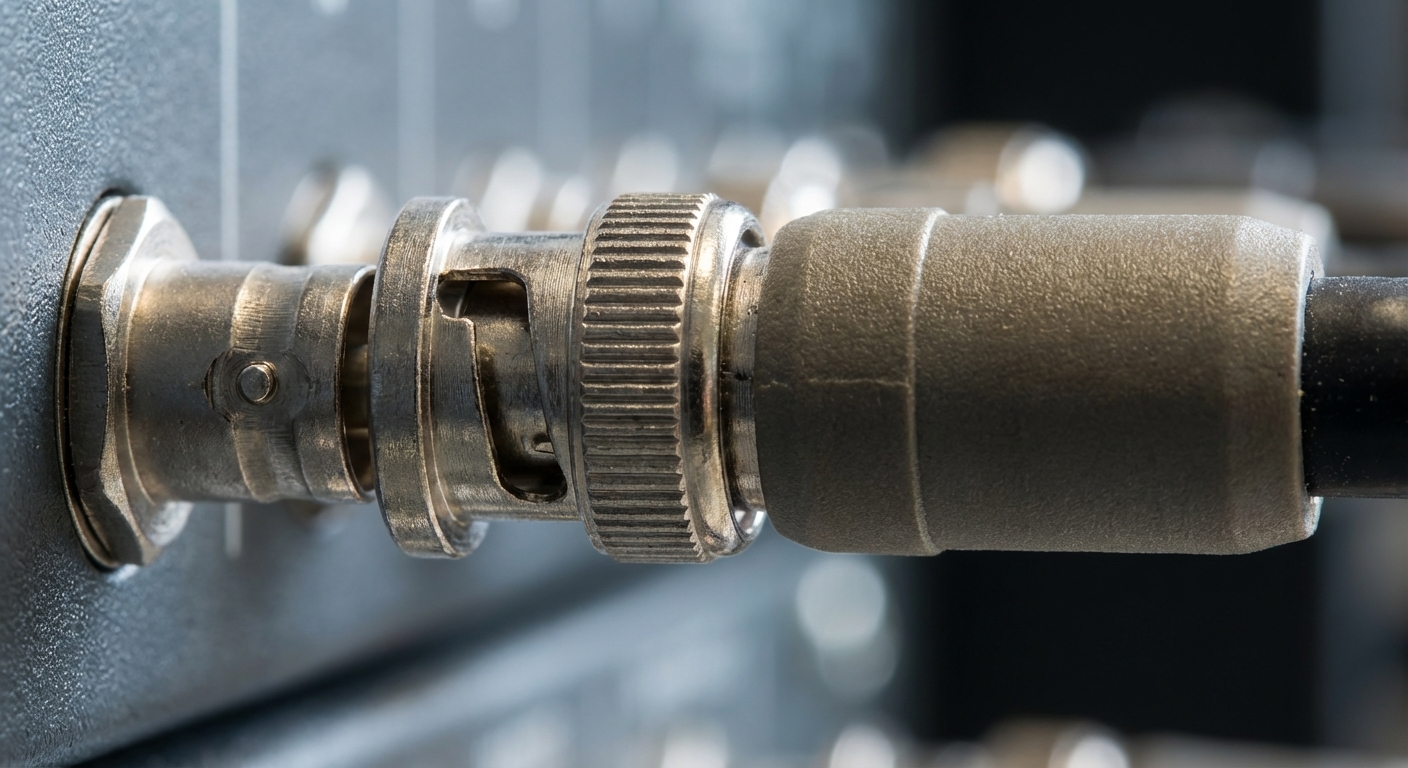
SDI is designed to run over 75-ohm coaxial cable, a transmission medium that is already familiar in many surveillance and AV infrastructures. This gives SDI an important deployment advantage: in facilities with existing coaxial cabling, system upgrades can often be made without full recabling.
That makes SDI particularly relevant in retrofit projects, transportation infrastructure, industrial sites, and long-established surveillance environments where replacing the full signal path would add cost, labour, and operational disruption.
So while SDI is often discussed in terms of latency and video quality, its physical practicality is also part of its continuing relevance.
This is the heart of the article.
SDI remains widely used because it supports the one thing many professional monitoring systems cannot compromise: real-time monitoring.
Because SDI transmits video directly and without the interface-level compression and network processes common in IP systems, it enables near-zero latency video display. In operational terms, this means the operator sees the event with minimal delay between capture and display.
Where a security team is following movement across a platform, observing a restricted entrance, or verifying a live incident, this speed of visibility matters.
SDI does not depend on shared network performance. It is not affected in the same way by bandwidth congestion, router issues, firewall restrictions, or broader network instability. This gives it an advantage in environments where monitoring reliability must remain separate from IT traffic conditions.
Professional monitoring systems are not evaluated only by image quality on a good day. They are judged by how consistently they perform over time. SDI’s simpler and more direct signal path helps reduce variables within the live viewing chain, making behaviour more predictable for operators and integrators alike.
In many professional environments, system design is shaped not only by ideal specifications but by practical constraints. Existing infrastructure, deployment timelines, site complexity, and maintenance workload all matter. SDI’s compatibility with coaxial infrastructure and its straightforward connection model help support faster, simpler integration in the right applications.
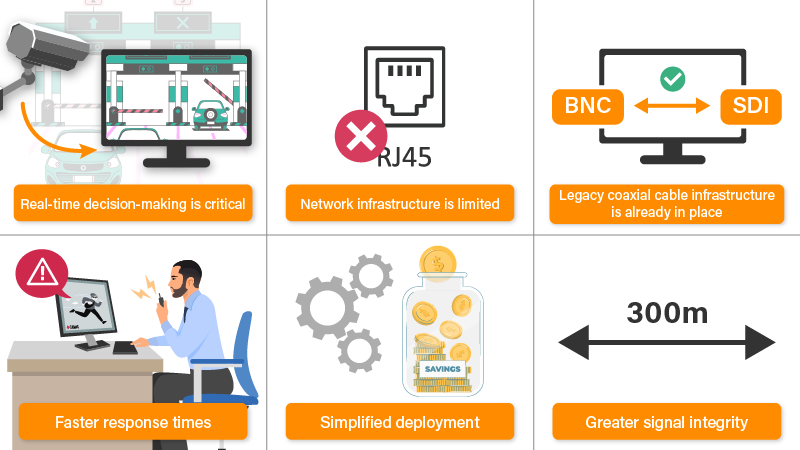
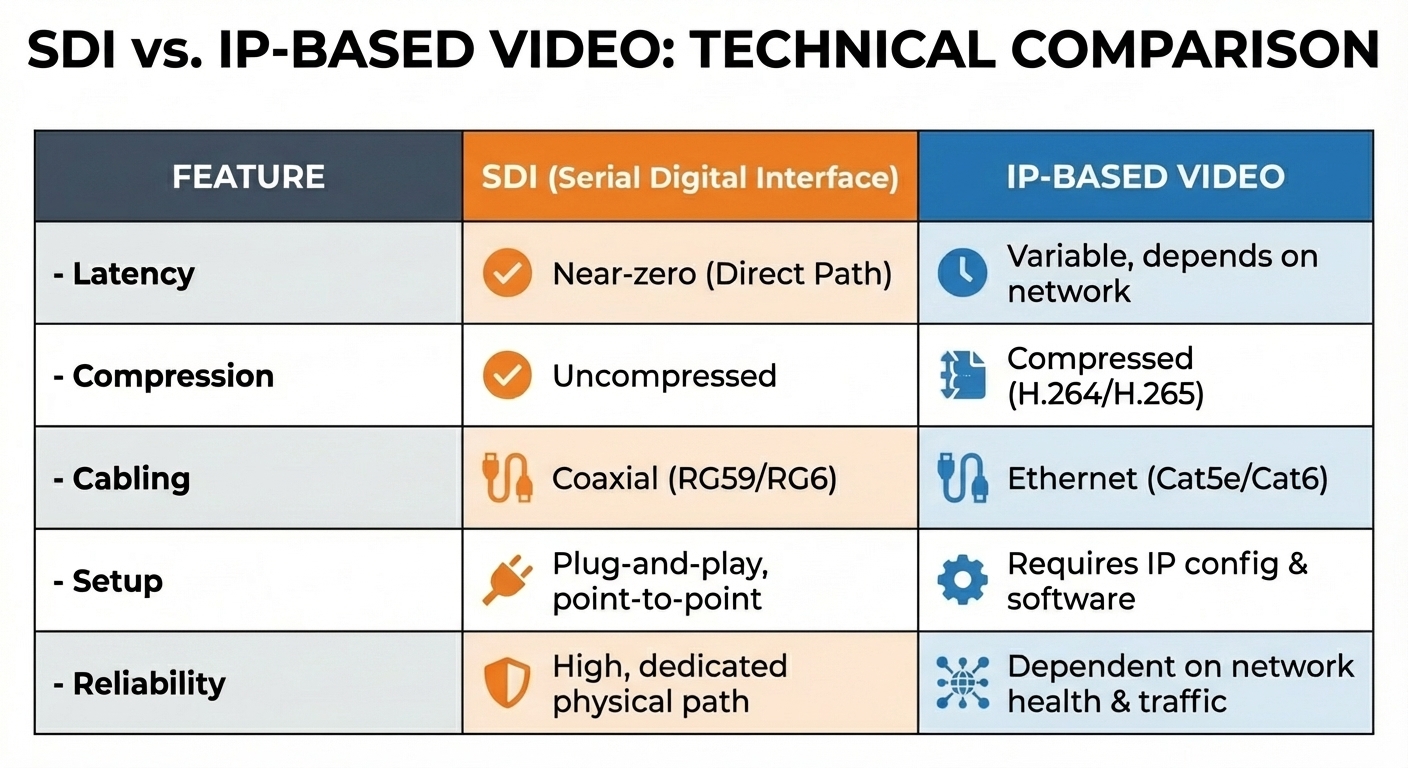
SDI and IP are often compared as if one must replace the other. In practice, they are often used for different purposes within the same surveillance system.
SDI is typically preferred where live, local monitoring is the priority. Its direct signal path makes it well suited to environments where operators need immediate visual feedback and predictable on-site performance.
IP-based systems, by contrast, are often chosen for functions such as remote access, recording, centralised management, and broader network integration. Their value lies in flexibility and scalability across larger connected infrastructures.
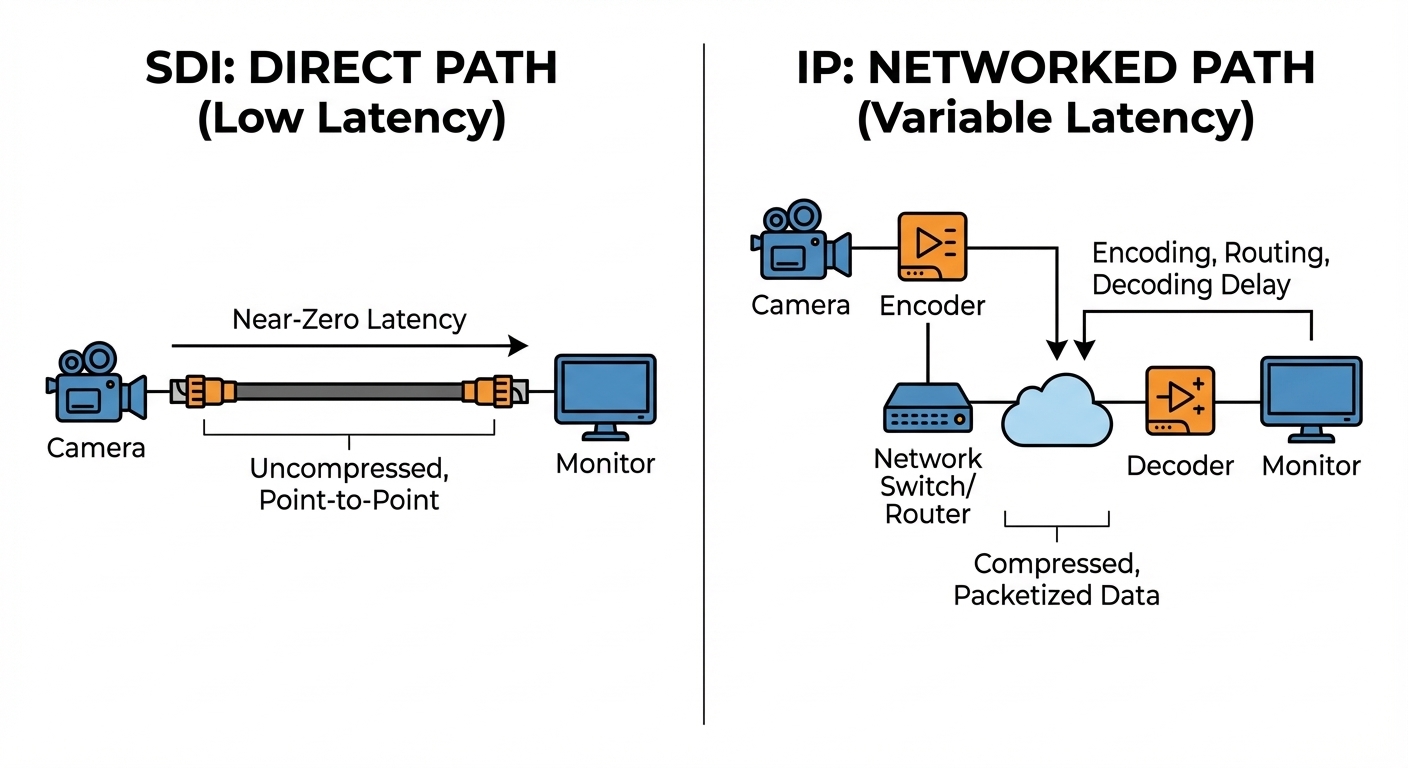
For many professional deployments, the question is not whether SDI or IP is better in absolute terms. The more useful question is which role each technology should play within the monitoring workflow.
In many real-world systems, both coexist. Live viewing may rely on SDI, while storage, remote review, or wider system management may be handled through IP infrastructure. The distinction is therefore less about replacement and more about operational fit.
SDI is most effective in environments where delayed video can affect response, coordination, or operational confidence.
The common thread across these environments is not the industry itself. It is the requirement for real-time visual confidence.
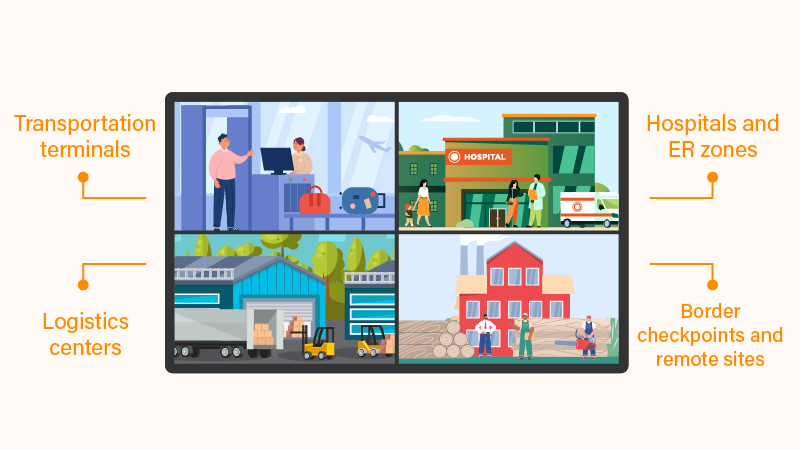
It is easy to assume that any older professional standard must now be obsolete. But that is not how infrastructure works in mission-critical environments.
Technologies remain relevant when they continue to solve a real problem better than available alternatives in a specific use case. SDI continues to matter because the demand for low-latency, stable, immediate monitoring has not disappeared. If anything, the pressure on professional monitoring systems has increased.
Higher resolutions, more cameras, larger facilities, and more demanding operational expectations do not reduce the need for reliable live video. They make that need more visible.
SDI has remained relevant not by competing with every feature of network-based systems, but by staying strong at what it was designed to do: deliver dependable, real-time video.
Knowing what SDI is helps explain why professional monitoring systems still use it. But defining the signal standard is only the beginning.
The next question is practical: if a surveillance environment depends on real-time monitoring, what kind of display is needed to support that requirement? Signal compatibility is only one part of the answer. The display must also match the operational environment, integration method, durability requirements, and deployment role.
That is where the next stage of the journey begins.
Next: Learn how to choose the right SDI monitor for your surveillance system.
SDI began as a broadcast standard, but its continued relevance in surveillance comes from a different truth: it helps professionals see events in real time, with stability and confidence.
For system integrators and operators working in environments where timing matters, SDI is not just a legacy format or a technical specification. It is a practical monitoring standard built around direct transmission, signal reliability, and immediate visual response.
In modern surveillance, the value of SDI is simple and enduring. When real-time monitoring matters, the video path matters too.


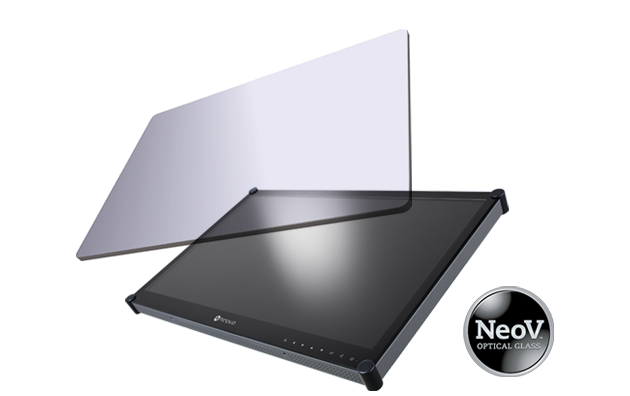 NeoV™ Optical Glass Screen
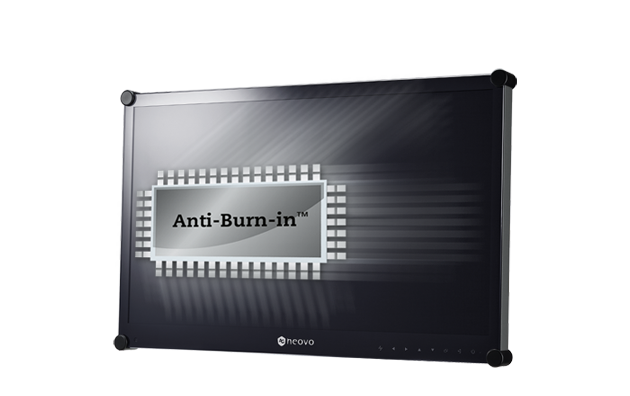 Anti-Burn-in™ Technology