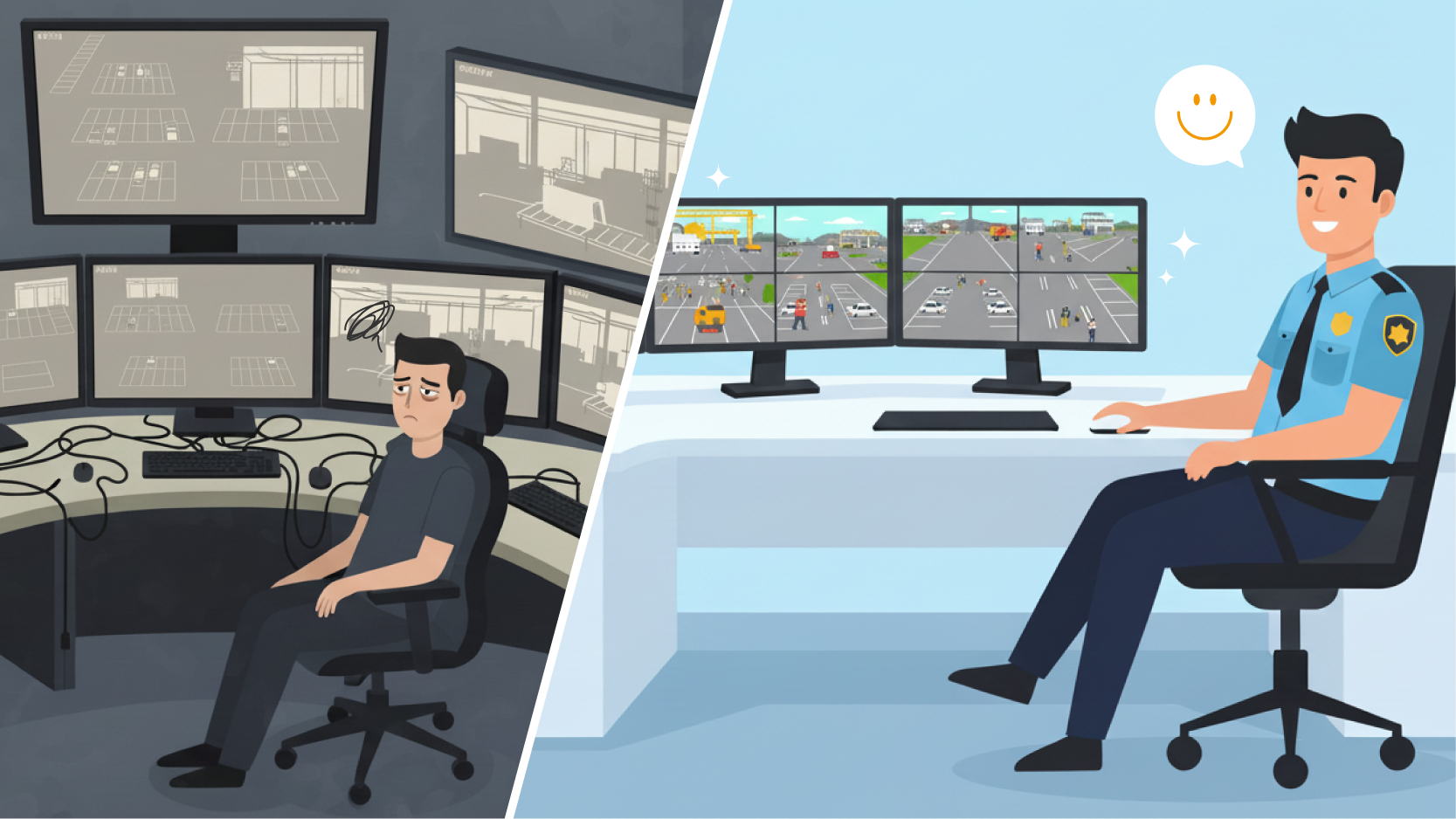
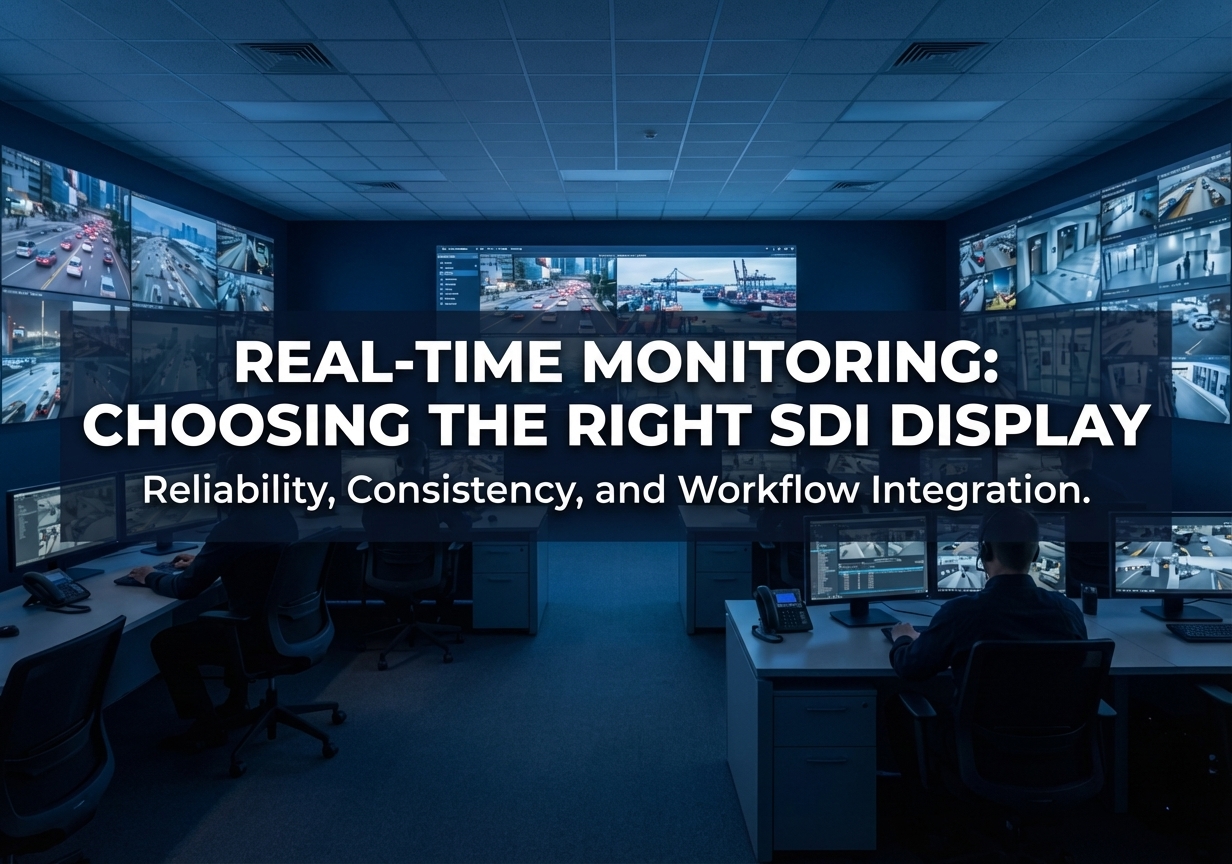
Choosing the right SDI display (often referred to as an SDI monitor) is not just a technical decision—it is a Choosing the right SDI display (often referred to as an SDI monitor) is not simply a matter of specifications—it is a decision that directly affects how effectively a surveillance system delivers real-time visibility.
In professional monitoring environments, the display is not a passive output device. It is part of the operational workflow, shaping how video is interpreted, how quickly events are understood, and how confidently responses are made. A display that performs inconsistently can introduce uncertainty, even when the underlying video signal is stable.
While SDI defines how video is transmitted, the display determines how that video is experienced in practice. Selecting the right display therefore requires understanding how it will perform under real-world deployment conditions, rather than evaluating it in isolation.
Every specification decision should begin with a clear understanding of the monitoring objective.
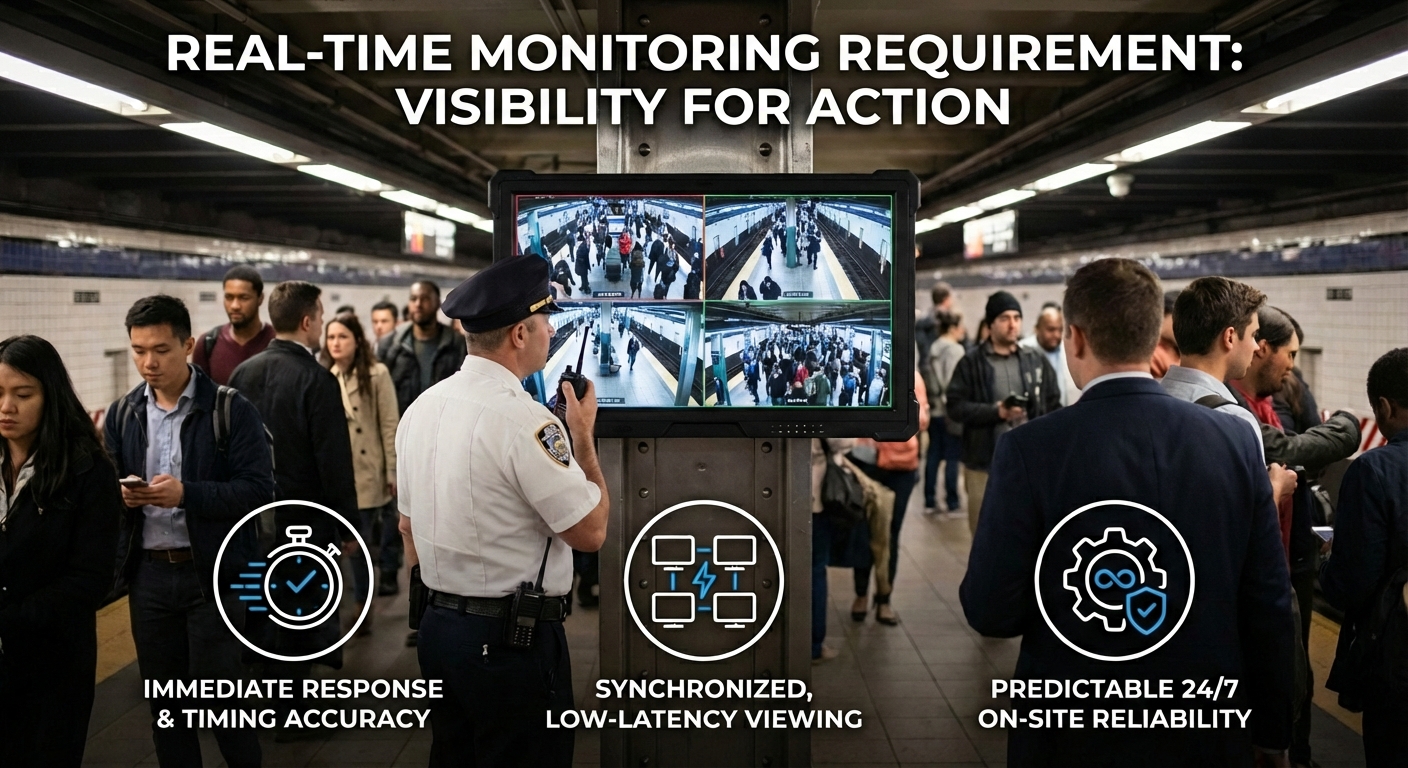
An SDI display becomes relevant when the system depends on real-time visibility—where operators must observe events as they happen and respond without delay. This includes environments such as control rooms, transportation systems, industrial monitoring, and security operations.
In these contexts, even small inconsistencies in display behaviour can affect operational response. What matters is not only image quality, but timing accuracy and predictability.
This is where professional monitoring requirements differ from general display use. Consumer displays are often evaluated based on features or visual appeal. In professional environments, the evaluation criteria shift toward reliability, consistency, and performance under continuous operation.
In practical deployments, an SDI display is typically selected when the monitoring task requires:
In these scenarios, the display becomes part of the monitoring system—not just a viewing surface.
In surveillance systems, the display directly influences how video is interpreted.
A well-specified SDI display ensures that video is presented clearly, consistently, and without delay. A poorly matched display can introduce variability in brightness, colour, or response behaviour, making it more difficult for operators to interpret what they see.
This becomes more critical as systems scale. In multi-camera environments, the display must maintain stable performance across multiple inputs, ensuring that visual information remains coherent and comparable.
In real-world deployments, these factors often determine whether a monitoring system performs reliably over time. The display is not simply part of the system—it is part of how the system functions.
The deployment environment is one of the most important factors in selecting an SDI display.
Different environments introduce different constraints, and the display must be specified accordingly to maintain stable performance.
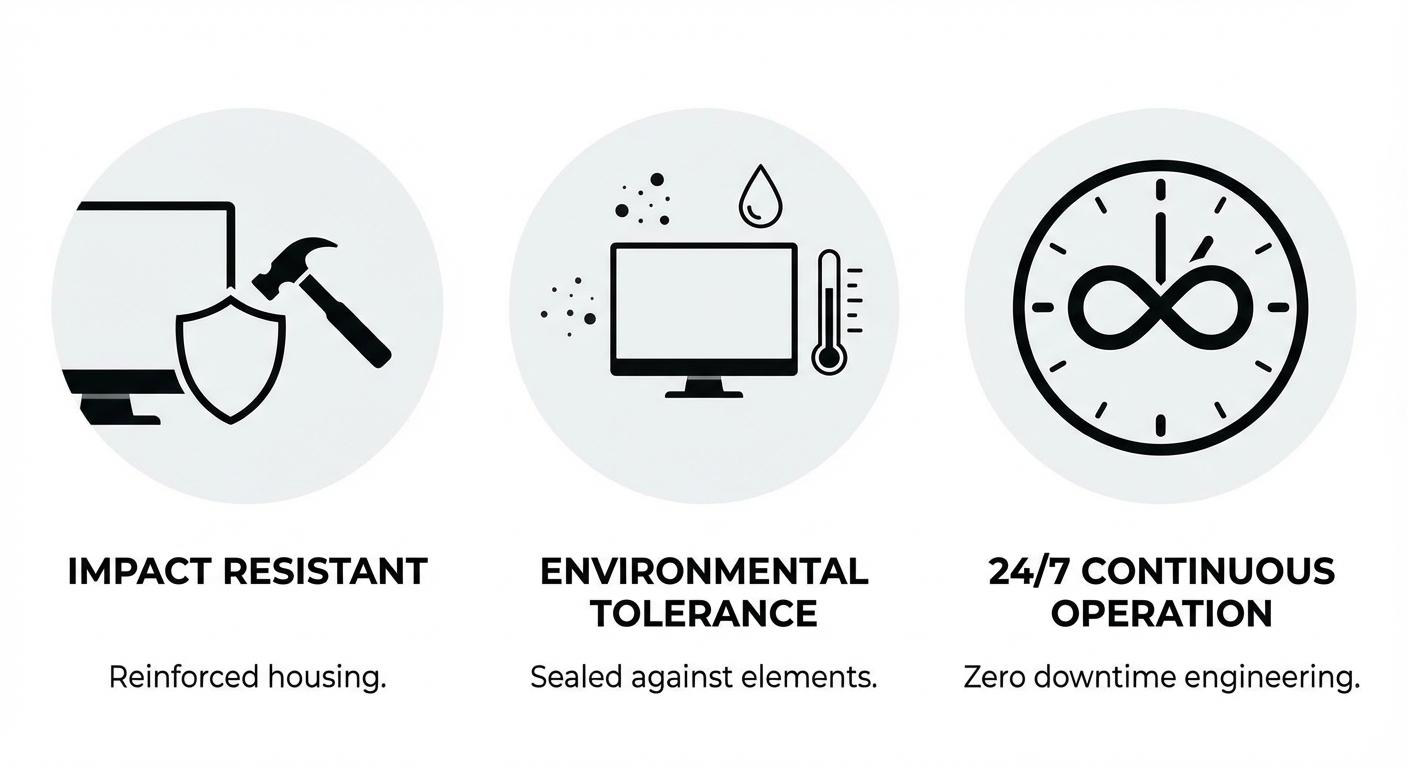
In checkpoints, kiosks, or public-facing installations, displays are exposed to repeated interaction, cleaning, and potential impact. In these conditions, physical durability directly affects system uptime.
Displays must maintain consistent visibility under stress, which often requires reinforced surfaces and resistance to wear caused by frequent use and cleaning.
Industrial environments introduce vibration, airborne particles, and temperature variation. These factors can affect both signal stability and hardware performance.
In such conditions, displays must be designed with structural robustness and environmental tolerance in mind. Reinforced enclosures and stable thermal behaviour help ensure that performance remains consistent over time.
In real-world industrial deployments, environmental interference can affect system reliability if not properly accounted for. Displays designed for these environments help maintain predictable monitoring conditions.
In control rooms, consistency becomes the primary concern.
Operators rely on multiple displays simultaneously, and any variation between screens can affect situational awareness. Displays must therefore deliver stable brightness, colour consistency, and predictable behaviour across extended periods.
Continuous operation capability is also essential, as monitoring systems are expected to run without interruption.
When selecting a monitor with SDI input, compatibility with SDI standards is essential, but it should be considered in the context of how the system is used.
SDI standards such as 3G-SDI and 12G-SDI support different levels of resolution and frame rate. In practice, the choice should be driven by operational requirements rather than specifications alone.
3G-SDI is commonly used in environments where motion clarity and frame consistency are important, such as transportation systems or industrial workflows.
12G-SDI supports higher resolution, making it suitable for applications where visual detail is critical for monitoring or analysis.
The key is not selecting the highest specification, but selecting the standard that aligns with how the video is used in real-world monitoring.
An SDI display operates as part of a broader system, and its effectiveness depends on how well it integrates within that system.
In multi-display deployments, signal distribution must be carefully considered. Displays that support loop-through functionality allow signals to be passed directly to additional displays or recording devices, reducing reliance on external hardware.
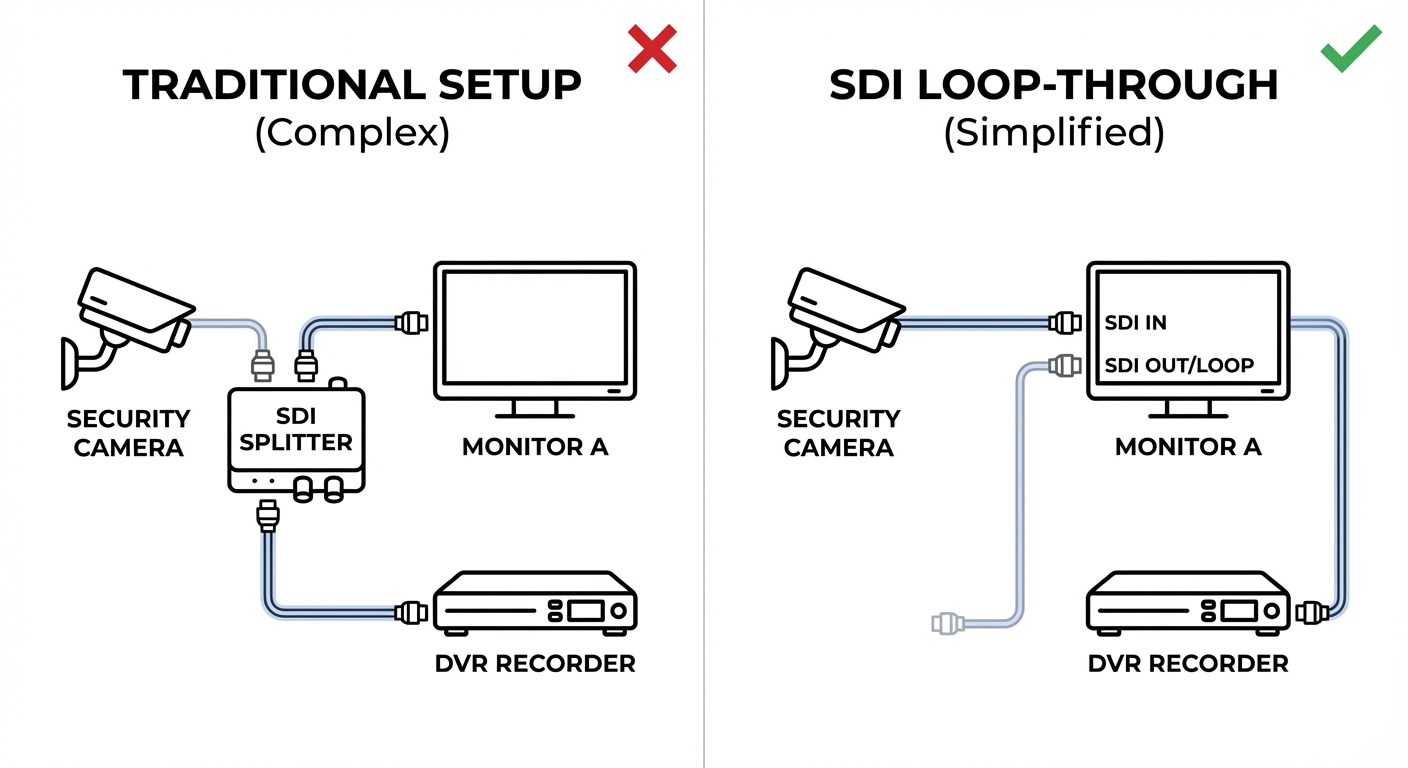
This approach supports a more structured system design, helping maintain signal integrity while reducing system complexity.
In facilities with existing coaxial infrastructure, SDI displays also offer practical advantages. Systems can often be upgraded without replacing cabling, reducing installation time and operational disruption.
For system integrators, this combination of stability and simplicity is a key factor in deployment efficiency.
Display size should be determined by how video is used, not simply by preference.
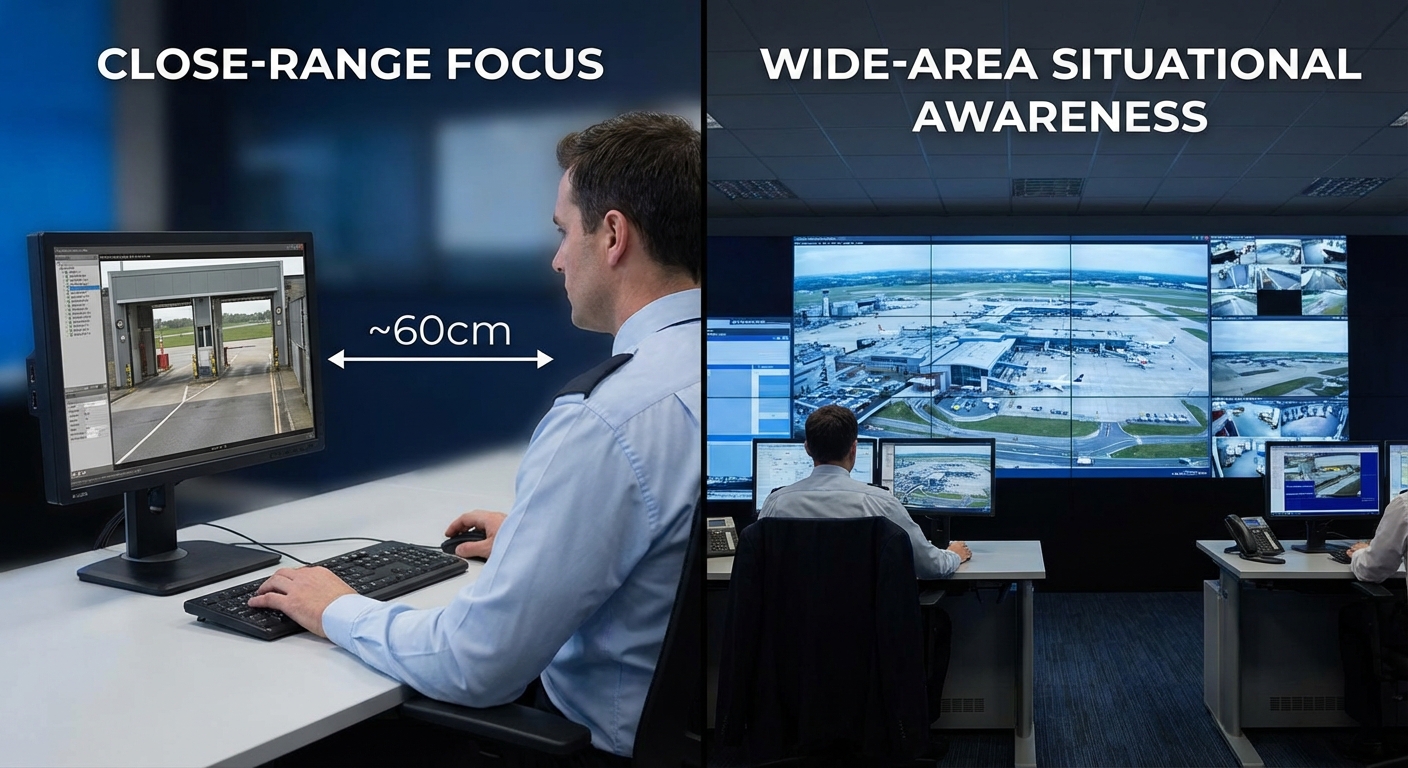
In close-range monitoring environments, smaller displays provide clear and focused visibility. In control rooms, larger displays are often required to support simultaneous viewing of multiple feeds, allowing operators to maintain situational awareness without switching between sources.
The selection of display size should support how information is interpreted, ensuring that operators can monitor effectively.
Surveillance systems operate continuously, and the display must support long-term performance.
Reliability is defined not only by whether the display functions, but by how consistently it performs under sustained use. Thermal stability, resistance to image retention, and overall durability all contribute to predictable performance.
In long-term deployments, factors such as lifecycle stability and mean time between failures (MTBF) become important considerations. Displays that maintain consistent performance over time help reduce maintenance requirements and support stable system behaviour.
Specifications alone do not define performance in real-world environments.
A well-chosen SDI display supports the operational workflow of the system. It integrates smoothly, performs consistently, and reduces the likelihood of system instability.
When selecting an SDI monitor for surveillance, the focus should remain on how the display performs in real-world monitoring environments—not just how it is specified.
If real-time monitoring is the priority, SDI displays designed for professional use are typically the preferred choice.
Understanding SDI explains how video is transmitted, but effective monitoring depends on how that video is ultimately presented.
For a foundational overview of SDI transmission and its role in real-time monitoring, you can refer to our guide on what SDI is. Building on that, understanding how delay affects monitoring performance provides further context, particularly in environments where timing accuracy is critical, as discussed in our article on low latency in surveillance systems.
In practice, achieving reliable monitoring requires alignment between signal transmission and display performance. The display must support direct signal compatibility, stable output, and seamless integration within the overall system.
In surveillance systems, the display is not simply a viewing device—it is part of how decisions are made.
Choosing the right SDI display means selecting a solution that performs reliably, consistently, and predictably under real-world conditions.
In professional monitoring environments, the choice of display is never arbitrary.


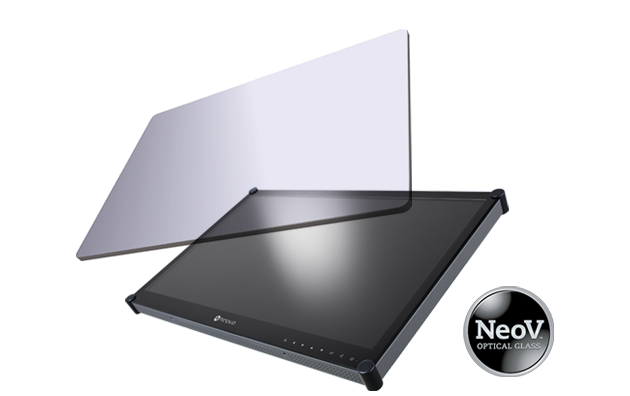 NeoV™ Optical Glass Screen
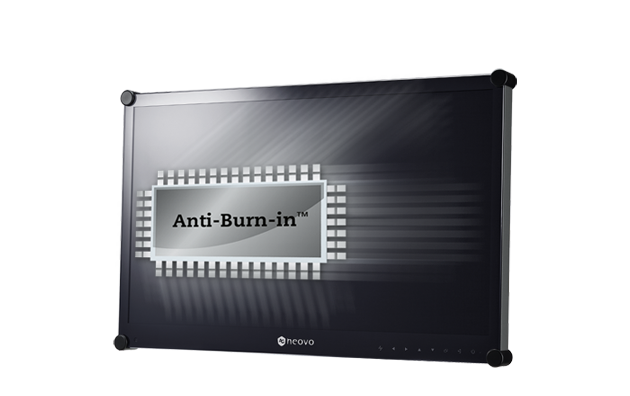 Anti-Burn-in™ Technology