NDAA Compliance in Video Surveillance: What It Means and How to Choose Compliant Displays
Discover why NDAA compliance is essential for secure video surveillance deployments. Learn how NDAA-compliant displays help organizations mitigate risks, protect sensitive data, and ensure long-term operational security in government, defense, and high-security environments.
Table of contents
Share
What Is NDAA Compliance in Video Surveillance?
NDAA compliance refers to restrictions under Section 889 of the U.S. National Defense Authorization Act, which prohibit the use of specific manufacturers and components in surveillance systems.
For organisations involved in government contracts or regulated environments, using non-compliant equipment can lead to contract violations, forced system replacement, and operational risk.
Using non-compliant surveillance equipment can also result in project disqualification and long-term infrastructure instability. As regulatory requirements expand, NDAA compliance is increasingly becoming a baseline standard for professional surveillance deployments.
Do You Need NDAA-Compliant Surveillance Equipment?
Procurement officers and system integrators should mandate NDAA-compliant equipment if their organisation:
Works with government, federal, or public sector projects.
Participates in heavily regulated procurement processes.
Deploys surveillance systems in critical infrastructure (e.g., transport, utilities).
Plans for long-term system scalability and corporate liability protection.
Even when not legally mandatory today for private enterprises, non-compliant systems carry a hidden risk. As global compliance requirements expand into the corporate IT sector, non-compliant hardware may require costly, forced replacements in the future.
Why NDAA Compliance Matters Beyond Regulation
NDAA compliance is not solely an administrative checkbox; it profoundly affects system reliability, procurement eligibility, and long-term operational stability.
Even if your organization is not directly involved in federal contracts, using NDAA-compliant security equipment can help prevent future procurement and operational risks. Here’s why compliance should be on your radar:
Avoid Costly Replacements & Business Disruptions – If non-compliant devices are flagged in your security infrastructure, they may need to be removed and replaced, leading to unexpected expenses and downtime.
Supply Chain Security & Trust – Organizations increasingly prioritize secure supply chains, and NDAA compliance serves as a benchmark for trusted, regulation-approved equipment.
Future-Proof Your Investments – As regulations tighten, ensuring compliance now prevents long-term operational risks that could arise if non-compliant devices are later restricted.
Protect Sensitive Data & Infrastructure – While NDAA focuses on restricting specific manufacturers, its broader goal is to mitigate potential security threats in video surveillance systems.
The Hidden Risks of Using Non-Compliant Surveillance Displays
While the industry focuses heavily on IP cameras and servers, the final endpoint—the display—is often a blind spot.
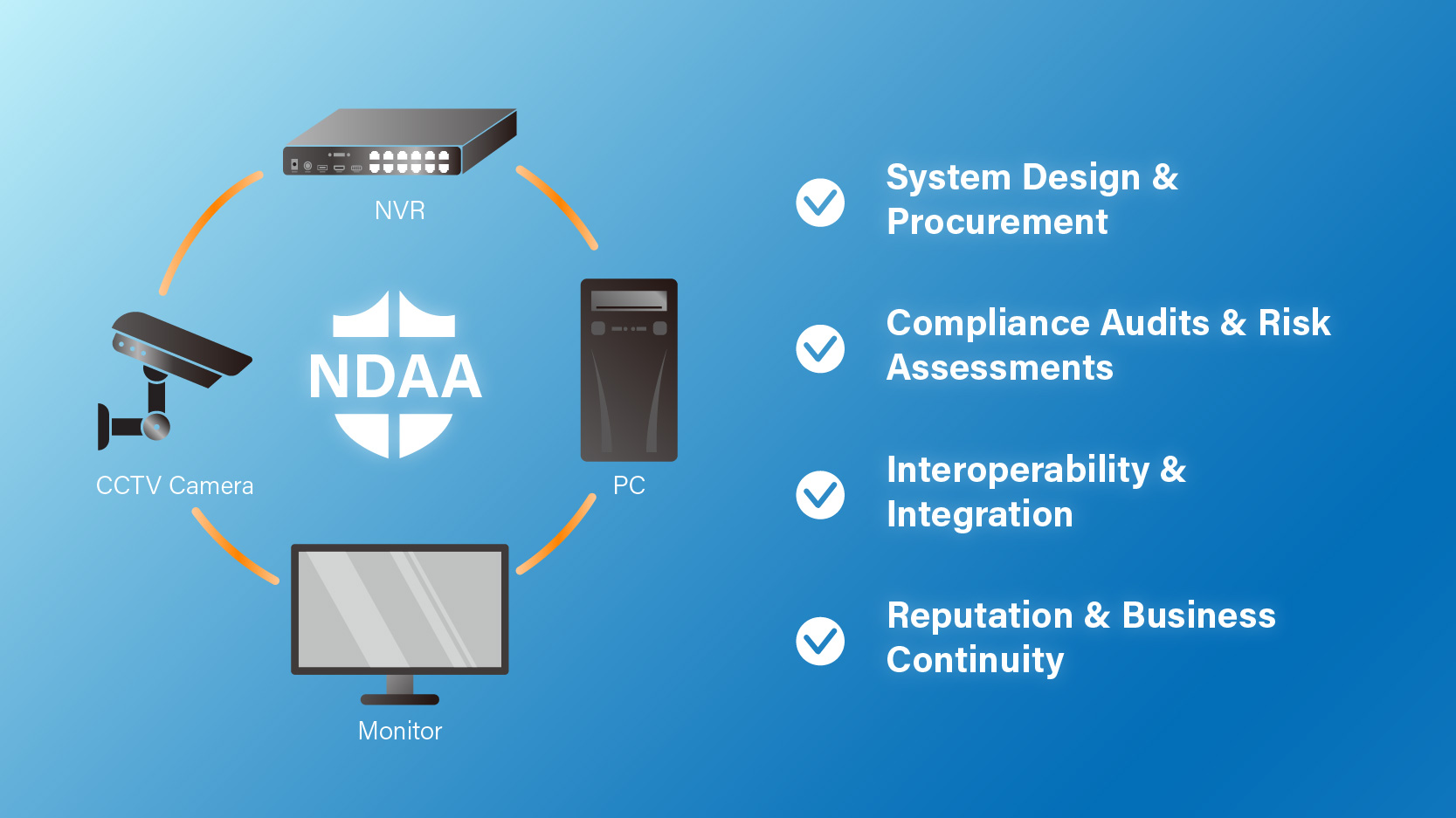
Key areas where NDAA compliance plays a role:
System Design & Procurement – When selecting new video surveillance displays, cameras, or networking equipment, ensuring that all components meet NDAA Section 889 standards is essential.
Compliance Audits & Risk Assessments – Organizations that work with government agencies or regulated industries must periodically review their video surveillance infrastructure for compliance gaps.
Interoperability & Integration – Security professionals must verify that NDAA-compliant displays and monitoring systems seamlessly integrate with existing video surveillance setups.
Reputation & Business Continuity – Deploying compliant solutions not only mitigates risk but also enhances trust and credibility when working with clients in regulated industries.
How NDAA Compliance Affects Display Selection
Displays are frequently overlooked in compliance planning, yet they are a foundational part of the surveillance architecture. When selecting a display, regulatory compliance must be rigorously evaluated alongside heavy-duty technical performance.
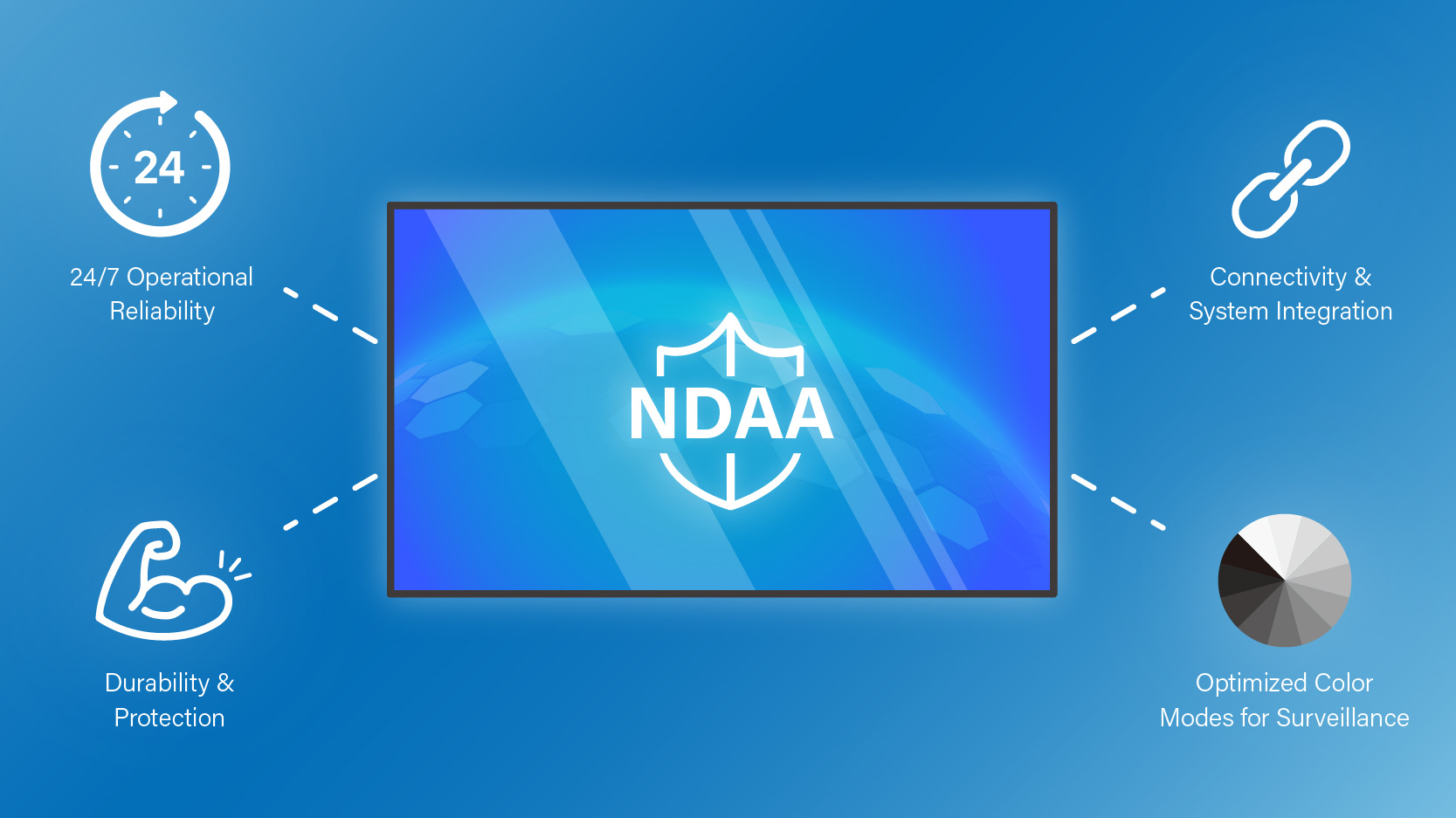
24/7 Operational Reliability – Displays should be designed for continuous monitoring without performance degradation.
Durability & Protection – Built for long-term reliability, ensuring stable operation in security environments.
Connectivity & System Integration – Surveillance operations require BNC pass-through, HDMI, and DisplayPort options to ensure compatibility with legacy and modern security systems.
Optimized Color Modes for Surveillance – Displays with dedicated video surveillance color settings provide enhanced contrast for object recognition, clear visibility in low-light conditions, and consistent image performance for critical monitoring.
While these specifications are important for video surveillance displays, NDAA compliance itself does not define specific hardware specifications such as resolution, brightness, or connectivity ports. Rather, NDAA regulations restrict the use of certain manufacturers and components to ensure a secure supply chain for surveillance technology.
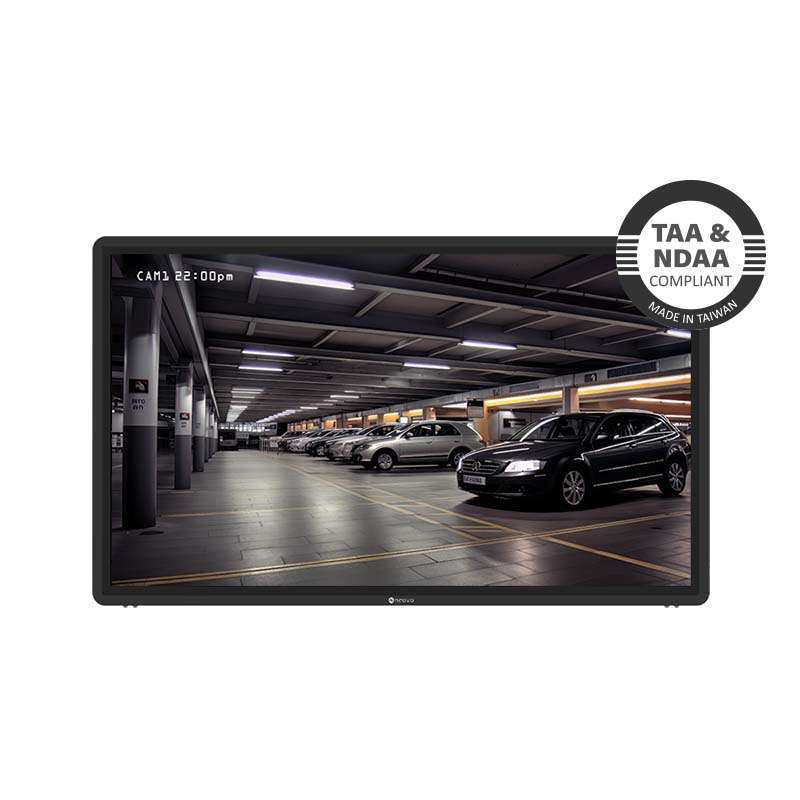
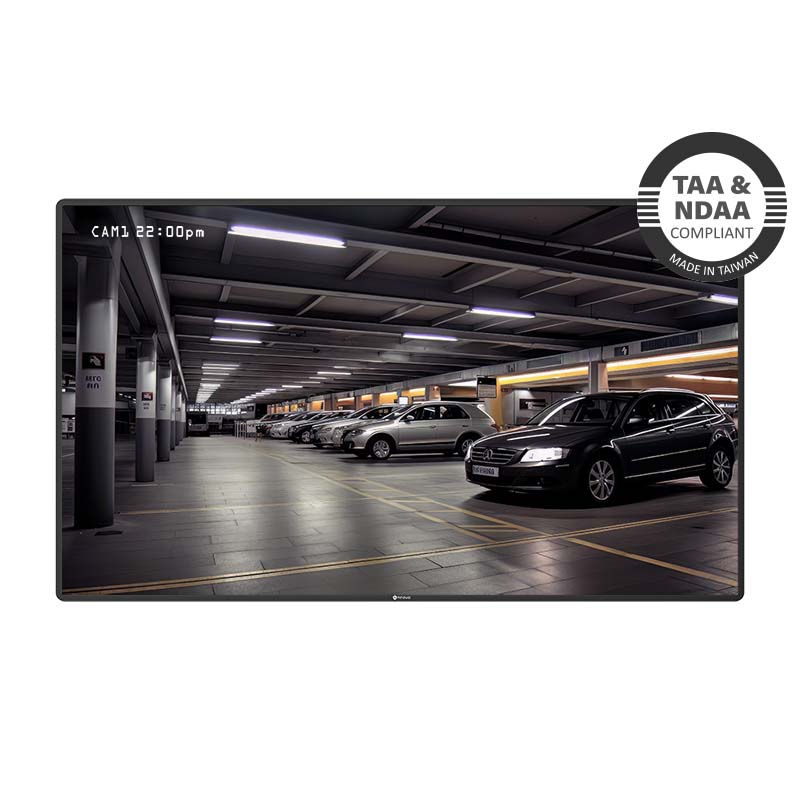
For organizations seeking NDAA-compliant video surveillance displays, AG Neovo offers solutions that combine compliance, reliability, and advanced features to support real-time situational awareness and critical security operations.
Common Mistakes When Choosing NDAA-Compliant Displays
Assuming Compliance Equals Performance: A compliant consumer display will still suffer from panel burn-in and rapid electrical failure under the stress of surveillance monitoring.
Ignoring Displays in Compliance Planning: Treating the monitor as a simple accessory and excluding it from compliance checks creates a massive supply chain vulnerability.
Focusing Only on Current Requirements: Failing to future-proof the facility. Future regulations may require complete system upgrades if compliance and durability are not considered early in the design phase.
Conclusion: Build Compliance Into Your Surveillance Strategy
NDAA compliance is rapidly shifting from a federal mandate to a global baseline requirement for professional surveillance systems.
Choosing fully compliant, professional-grade displays helps organisations reduce regulatory risk, maintain unhindered procurement eligibility, and dramatically improve long-term system stability. Secure the final layer of your surveillance network by specifying hardware that offers both verified supply chain integrity and unwavering 24/7 performance.






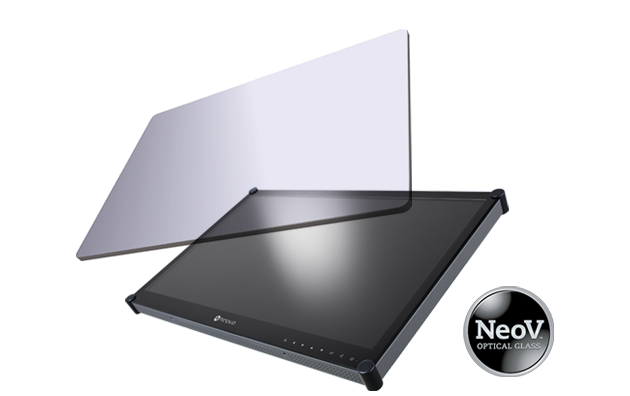 NeoV™ Optical Glass Screen
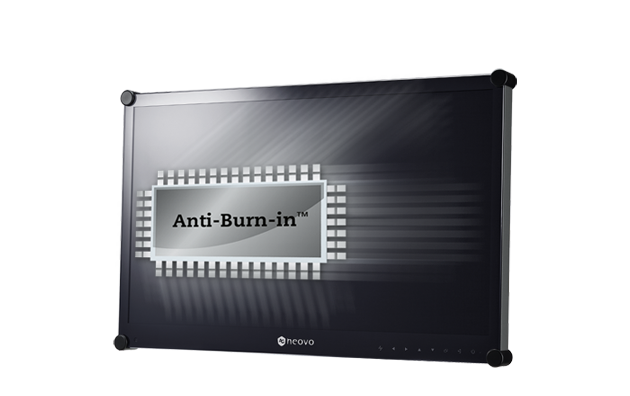 Anti-Burn-in™ Technology