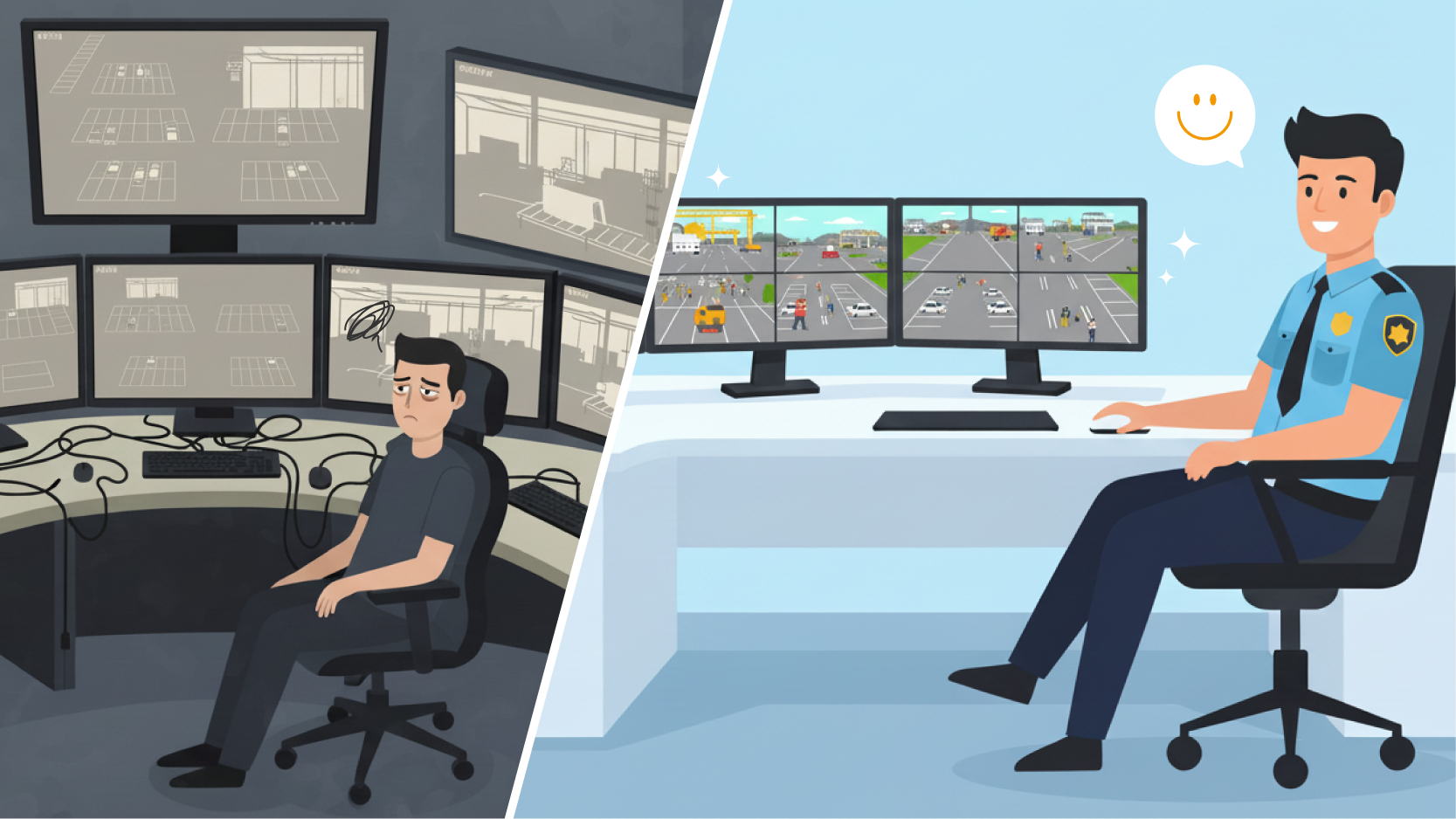
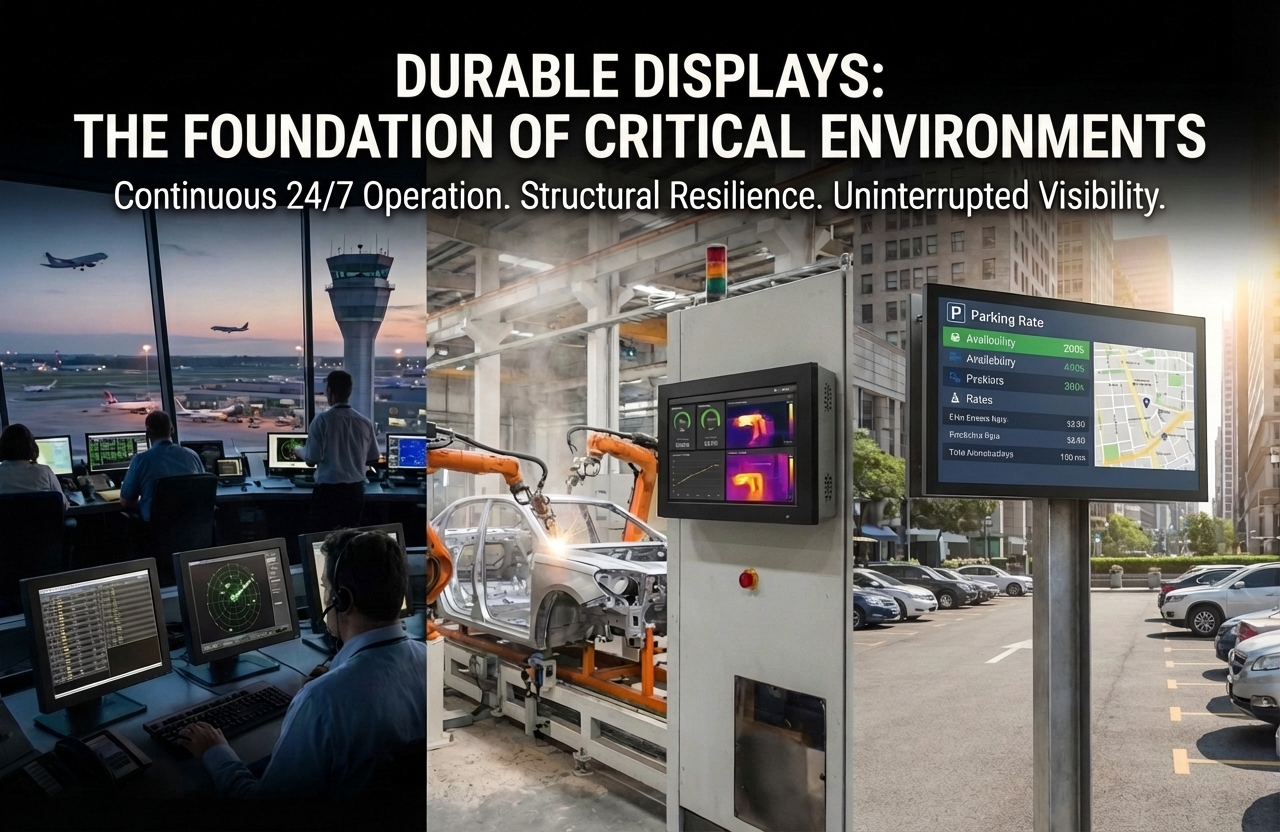
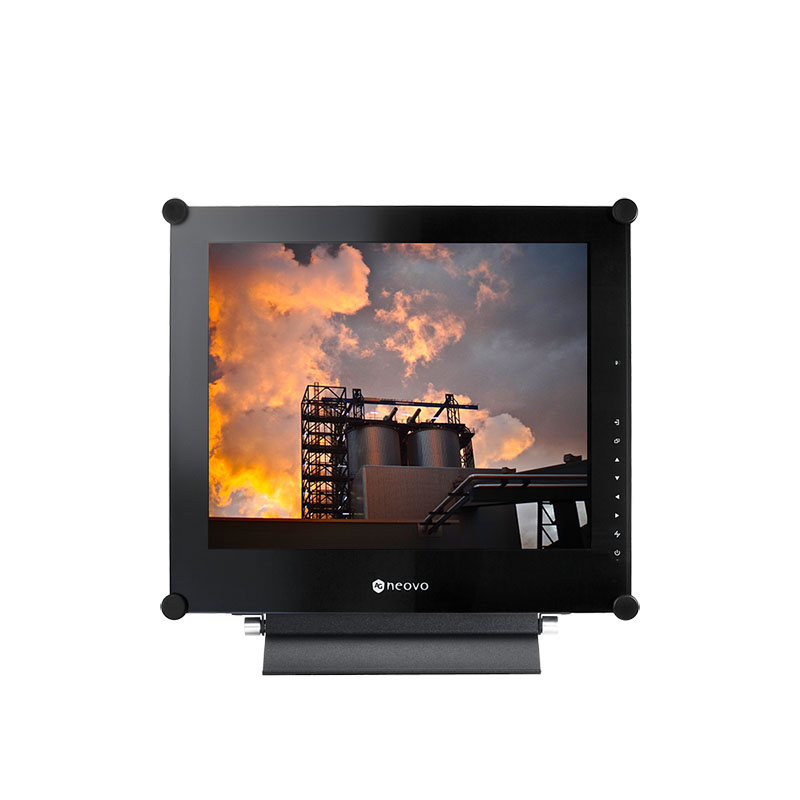
A commercial-grade durable display—often referred to as a durable monitor in surveillance and industrial environments—is defined by its ability to operate continuously (24/7) in demanding conditions without signal degradation or physical failure.
For system integrators deploying in location-critical sites, selecting the right display requires evaluating high MTBF (Mean Time Between Failures), structural resilience (such as metal housings for EMI shielding), and physical protection (such as IK-rated optical glass). These factors ensure uninterrupted real-time visibility and long-term operational stability across surveillance, transportation, industrial, and public infrastructure environments.
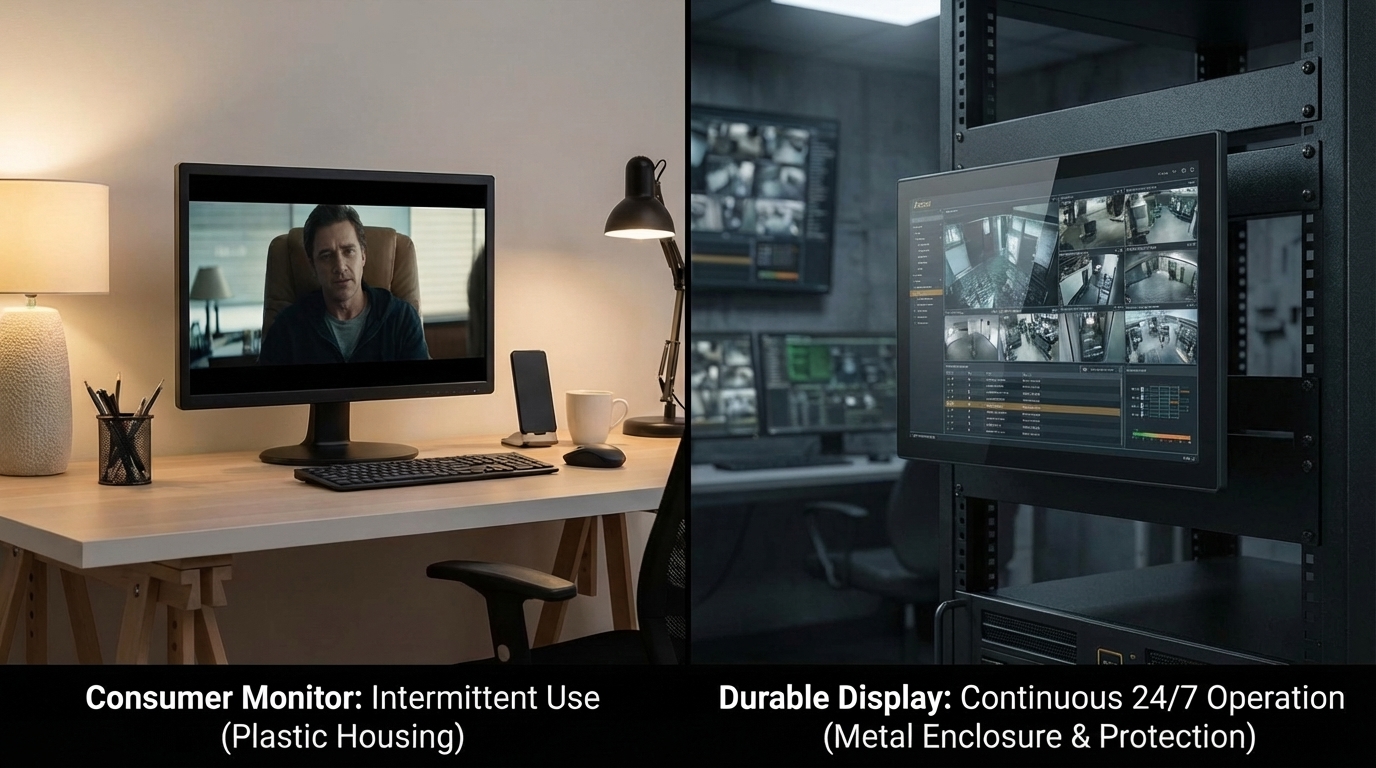
A durable display is engineered to operate continuously in high-stress environments where reliability, physical protection, and long-term performance are mandatory. Unlike standard consumer monitors, these professional displays are built to withstand environmental stress, maintain image stability under 24/7 operation, and support uninterrupted video feeds.
In many professional applications, the terms durable display and durable monitor are used interchangeably. However, the key distinction lies in design intent: durable displays are purpose-built for continuous operation in real-world environments, not intermittent use in controlled office settings.
For system integrators, selecting the correct display is not simply a matter of resolution or size. It is a strategic decision that directly impacts system uptime, response speed, and long-term operational reliability.
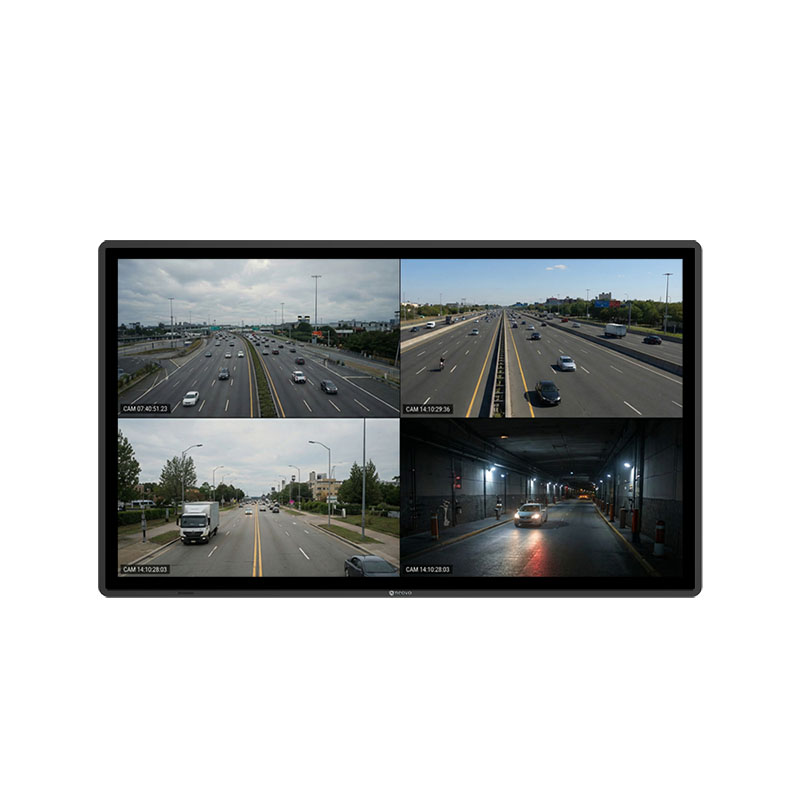
In location-critical environments—such as transportation hubs, factory control rooms, security checkpoints, and public infrastructure—real-time visual feedback is the first line of defence.
On-site personnel rely on immediate access to surveillance feeds to respond instantly to unexpected situations. While centralised monitoring systems provide oversight, local displays function as the execution layer of the system.
Any latency, signal interruption, or hardware failure at this level can directly compromise safety and operational efficiency.
These environments also expose hardware to challenging conditions, including:
Standard consumer monitors are not designed to withstand these conditions over extended periods, leading to degradation, failure, and increased maintenance costs.
System integrators face several recurring challenges when deploying displays in demanding environments:
Relying solely on control room feeds introduces latency. On-site displays must deliver immediate, uninterrupted video to support real-time decision-making.
Dust, humidity, thermal stress, and physical impact can degrade or damage standard displays, especially those not designed for industrial or surveillance use.
Many deployments require integration between legacy analogue CCTV systems and modern IP-based infrastructure. Displays must support multiple input types without relying on external converters.
Displays not engineered for continuous operation often fail prematurely, resulting in increased service costs, downtime, and operational disruption.
Understanding the difference between durable displays and consumer monitors is critical for system integrators:
| Factor | Consumer Monitors | Durable Displays |
|---|---|---|
| Usage Design | Intermittent use | Continuous 24/7 operation |
| Build Quality | Plastic housing | Metal enclosure with protection |
| Environmental Resistance | Limited | Designed for harsh conditions |
| Image Stability | Degrades over time | Maintains long-term consistency |
| System Integration | Limited inputs | Multi-input (HDMI, BNC, DP, etc.) |
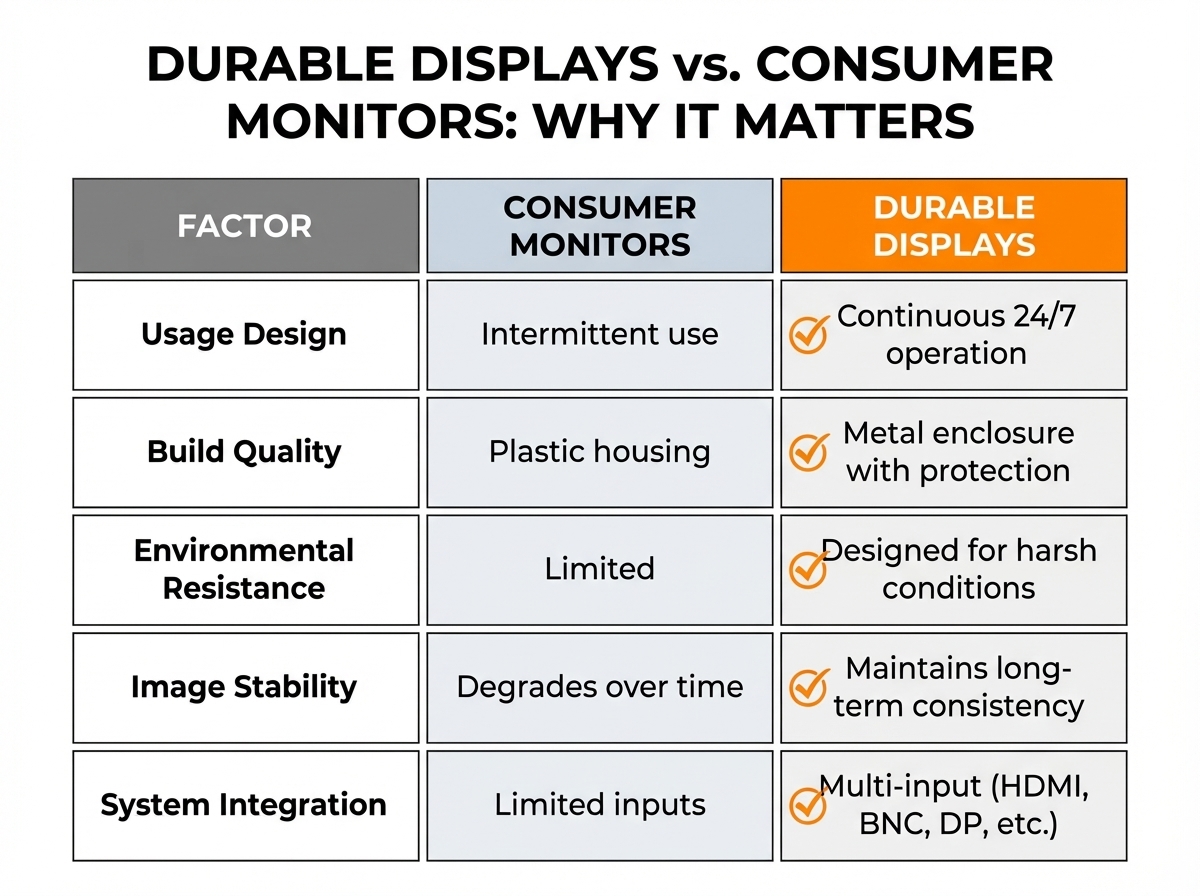
Consumer monitors may perform adequately in controlled environments, but they are not designed for continuous operation or exposure to real-world conditions. Durable displays provide the reliability and consistency required for professional deployments.
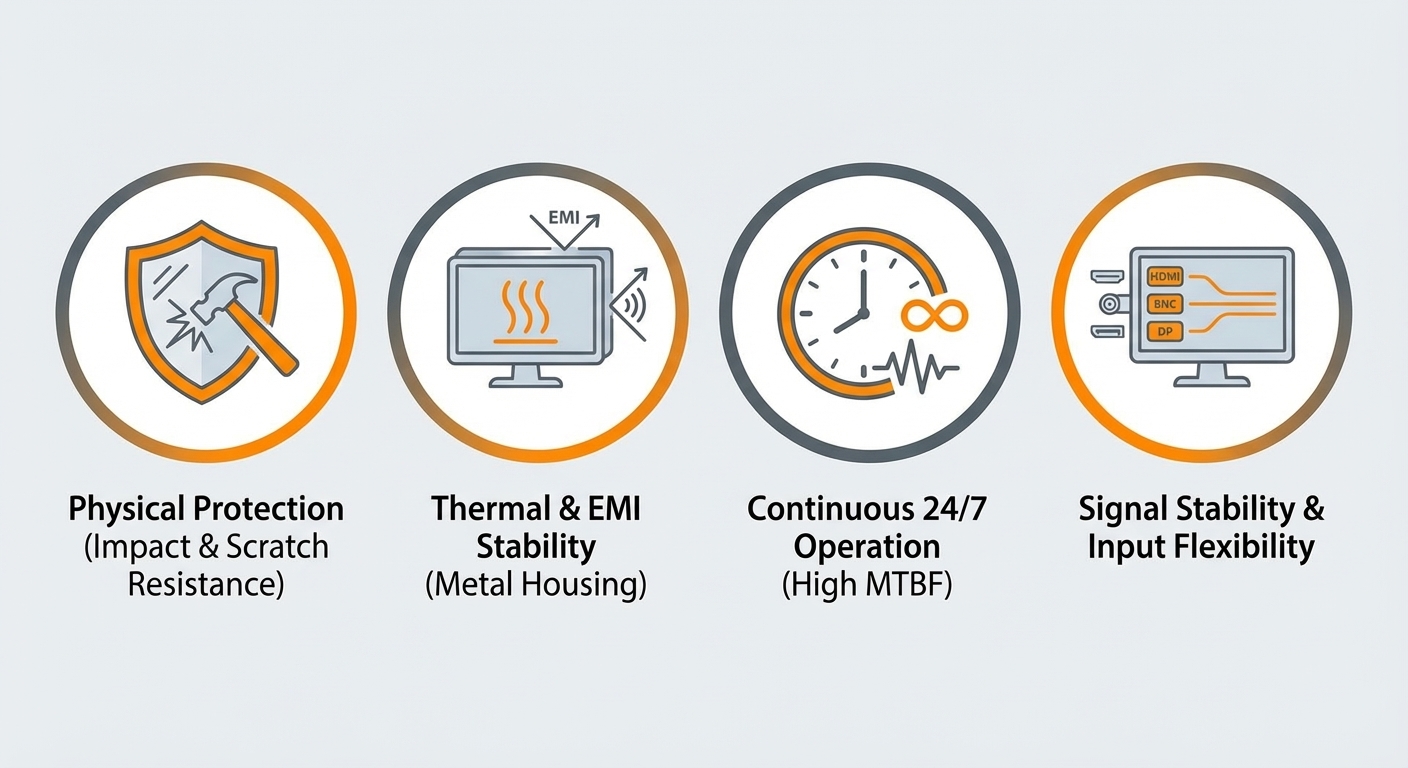
To ensure long-term performance and system stability, system integrators evaluate displays based on the following criteria:
Displays installed in exposed locations must resist impact, scratches, and rigorous cleaning.
Technologies such as hardened protective glass (e.g., NeoV™ Optical Glass) protect the LCD panel from damage while maintaining optical clarity—especially in high-traffic or public-facing environments.
Plastic enclosures trap heat and provide no protection against electromagnetic interference (EMI) generated by nearby equipment.
Displays with heavy-duty metal casings improve passive heat dissipation and act as a shielding structure, protecting internal components and maintaining signal stability.
Professional environments require displays that can operate without interruption.
High MTBF ratings and technologies such as Anti-Burn-in™ protection prevent image retention and component fatigue, ensuring consistent image quality over time.
Reliable integration across systems is essential.
Durable displays support multiple input formats—including HDMI, DisplayPort, and BNC—allowing seamless integration with both legacy CCTV systems and modern IP-based infrastructure.
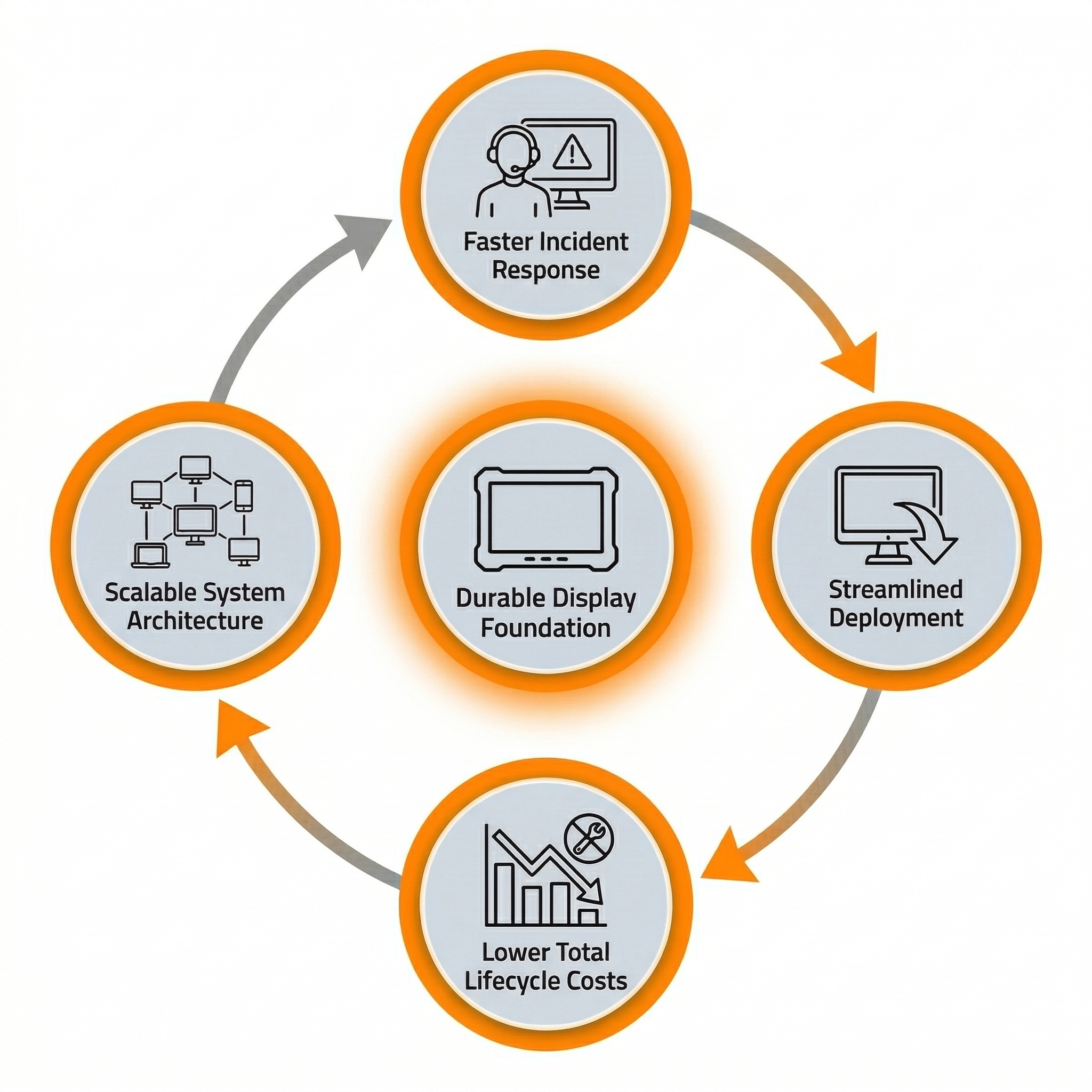
Selecting the right display directly impacts operational performance and system reliability:
When evaluating displays for critical environments, system integrators should consider:
By aligning these criteria with project requirements, integrators can ensure stable, efficient, and future-ready deployments.
As operational environments become more complex and distributed, durable displays play an increasingly critical role. They are not merely output devices—they are foundational infrastructure components that support real-time visibility and decision-making.
By selecting professional displays engineered for durability, system integrators can reduce operational risk, improve system performance, and ensure consistent 24/7 reliability across surveillance, transportation, industrial, and public infrastructure environments.
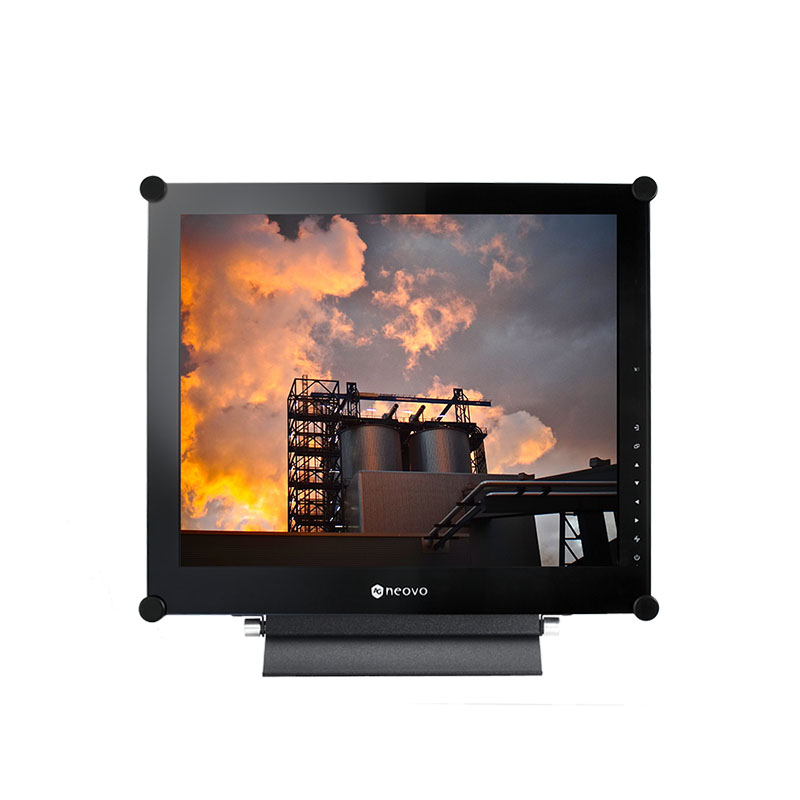



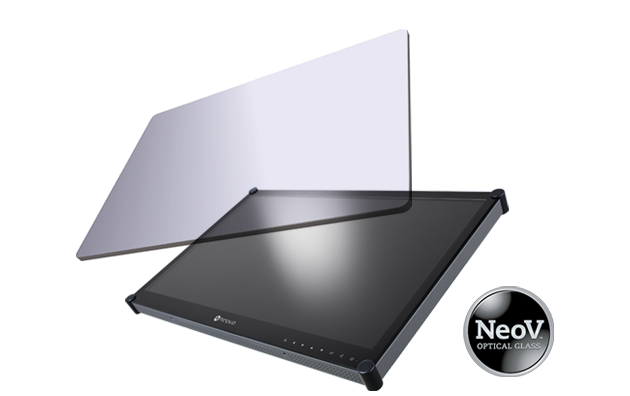 NeoV™ Optical Glass Screen
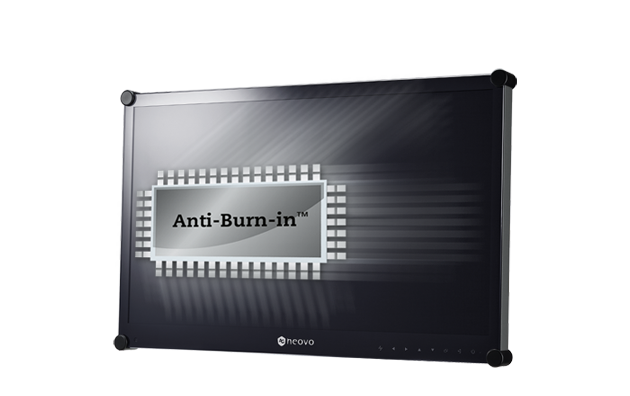 Anti-Burn-in™ Technology