What is Optical Bonding in Professional Displays? A Comprehensive Technical Guide
Standard monitors often fail in demanding environments due to severe glare, condensation, and fragile screens. Discover how Optical Bonding technology eliminates the LCD air gap to deliver superior image clarity, enhanced structural durability, and reliable performance across clinical, industrial, and public settings.
Table of contents
Share
In demanding professional environments—from brightly lit clinical operatories and outdoor digital signage to harsh maritime and industrial settings—standard commercial monitors frequently fail to deliver reliable performance. They suffer from severe glare, internal moisture condensation, and vulnerability to physical impact.
To overcome these structural limitations, display engineers rely on an advanced manufacturing technology known as Optical Bonding.
For system integrators, OEM engineers, and procurement specialists, understanding optical bonding is critical. It is not merely a screen enhancement; it is a fundamental structural upgrade that dictates a display’s visual clarity, environmental resilience, and long-term operational stability.
This guide explores the engineering principles behind optical bonding, its core hardware benefits, and why it has become a mandatory specification for professional-grade displays.
The Engineering Problem: The Air Gap in Standard Displays
To understand optical bonding, one must first understand how standard LCD screens are constructed.
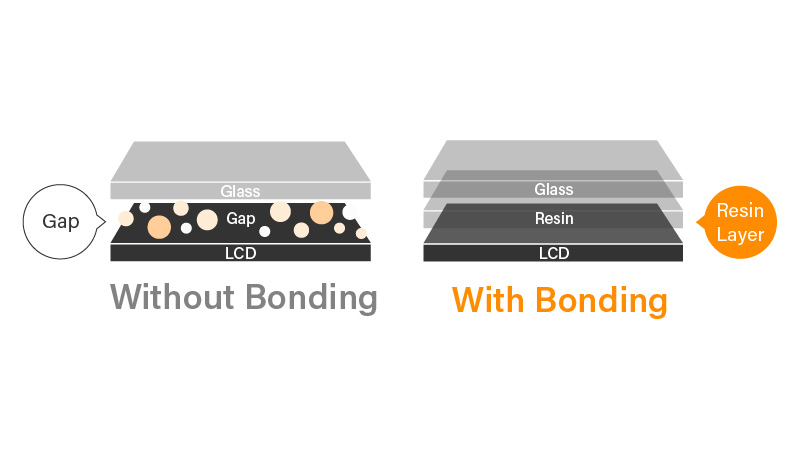
In a conventional display, the LCD panel and the outer protective cover glass are held together by adhesive applied only around the edges. This manufacturing method creates a microscopic layer of air—known as an air gap—between the glass and the LCD panel.
This air gap is the root cause of multiple performance failures in professional environments:
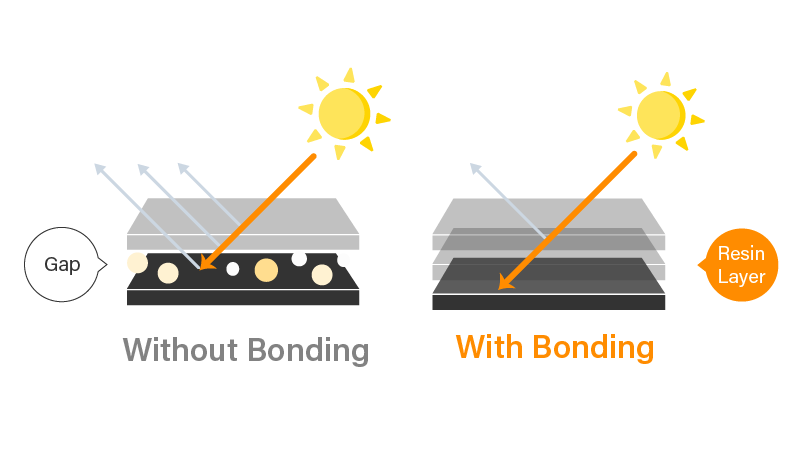
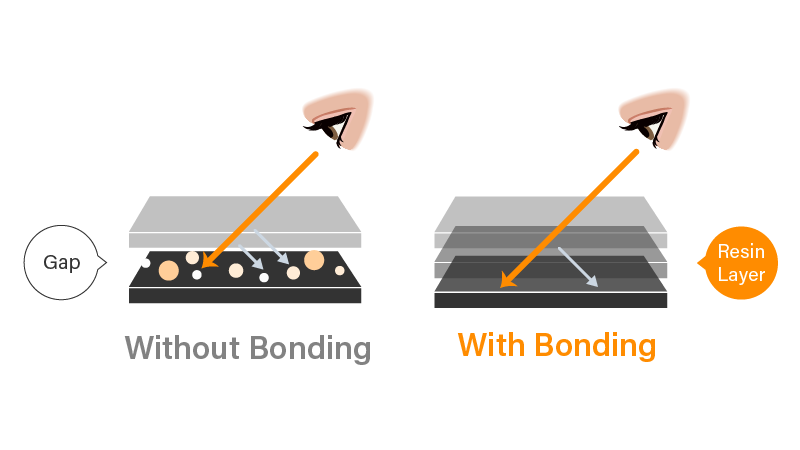
Internal Reflection: Light generated by the LCD panel bounces back and forth within this air gap, reducing image contrast and causing a washed-out appearance.
External Glare: Ambient light (from the sun or overhead operatory lights) easily penetrates the cover glass, refracts within the air gap, and creates severe glare.
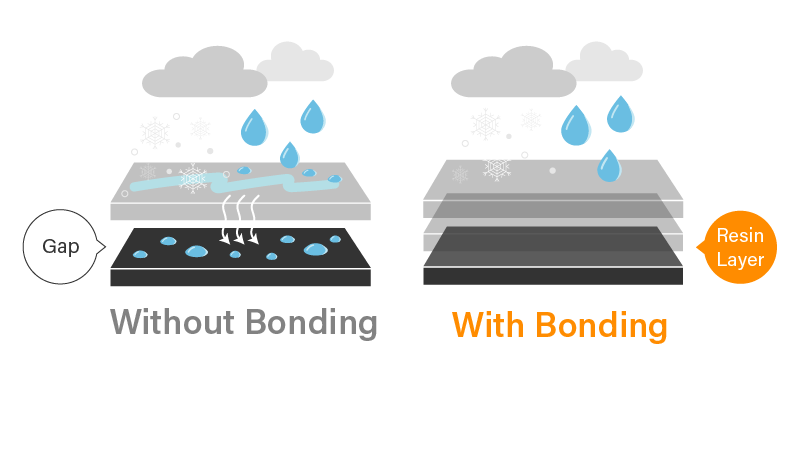
Condensation: In environments with rapid temperature fluctuations, moisture can penetrate the air gap, causing the screen to fog from the inside.
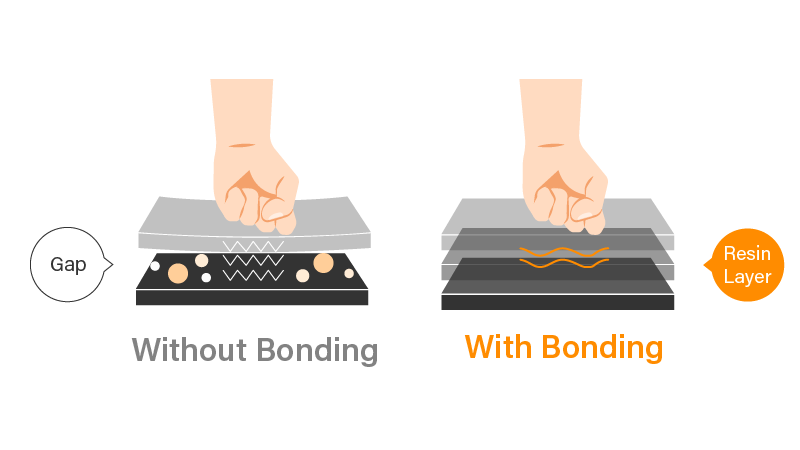
Structural Fragility: The hollow space leaves the cover glass vulnerable to shattering upon impact.
What is Optical Bonding?
Optical bonding is the process of completely eliminating this air gap. During manufacturing, a layer of optical-grade resin (or liquid optically clear adhesive) is injected between the LCD module and the cover glass, curing to form a solid, continuous optical layer.
By matching the refractive index of the glass, the resin, and the LCD panel, optical bonding fundamentally changes how light travels through the screen. It transforms a multi-layered, fragile component into a single, robust, high-performance display block.
Key Engineering Benefits of Optical Bonding
Eliminating the air gap yields immediate, measurable improvements in both optical performance and physical durability.
1. Superior Optical Clarity and Sunlight Readability
Brighter, Sharper Imaging: By eliminating the air gap, light transmission from the LCD backlight is maximised. This ensures optimal luminance and sharper image rendering, which is critical for applications demanding high visual precision, such as clinical imaging review or industrial design inspection.
Reduced Internal Reflections: The optical resin matches the refractive index of the glass and the panel, significantly minimising internal light scattering. This ensures that even the most minute details and subtle grayscale variations remain visible without being washed out.
2. Reduced Glare
Improved Visibility in Bright Environments: In settings exposed to intense ambient light—such as brightly lit clinical operatories, outdoor kiosks, or maritime bridges—optical bonding aggressively reduces external light reflections. This preserves contrast ratios and makes it significantly easier to view screens in any lighting condition.
Enhanced Visual Ergonomics: By minimising glare, the display substantially reduces visual fatigue and eye strain for professionals who must monitor screens for extended periods.
3. Increased Durability
Resistance to Scratches, Dust, and Liquids: The solid resin layer acts as a structural shock absorber. It provides robust protection against physical impacts and environmental ingress, making optically bonded monitors exceptionally well-suited for high-traffic public spaces or harsh industrial environments.
Long-Term Reliability: By fortifying the display architecture, these monitors are built to withstand rigorous daily wear and tear. This structural integrity directly translates to reduced maintenance downtime and an extended operational lifespan.
4. Enhanced User Experience
Streamlined Cleanability: The absolute absence of a hollow air gap means there is no space for dust, moisture, or condensation to penetrate and become trapped behind the glass. This allows the monitor to be easily and rigorously cleaned, which is a critical operational requirement in clinical facilities and food processing plants.
Supporting Sterile Environments: A seamlessly bonded front panel withstands aggressive chemical disinfectants without the risk of internal liquid ingress, ensuring the hardware strictly supports infection control protocols and contamination-free workspaces.
Optical Bonding vs. Standard Monitors: A Comparison
Engineering Metric
Optically Bonded Display
Standard Air-Gap Display
Optical Clarity & Light Transmission
High (matched refractive index eliminates internal scattering)
Moderate (light refracts and scatters within the air gap)
Glare Reduction
Significant (preserves contrast under intense ambient lighting)
Poor (highly reflective; images wash out in bright environments)
Durability & Impact Resistance
High (solid resin layer absorbs and dissipates mechanical shock)
Vulnerable (cover glass flexes into the hollow air gap upon impact)
Environmental Ingress (Condensation)
Eliminated (no hollow space for moisture or dust to accumulate)
High risk (temperature shifts cause internal fogging in the air gap)
Maintenance & Hygiene
Seamless and easy to disinfect; supports strict sterile protocols
Susceptible to liquid ingress and dust trapping during rigorous cleaning
Cross-Industry Applications
Because of its profound impact on durability and visibility, optical bonding is a critical specification across multiple professional sectors:
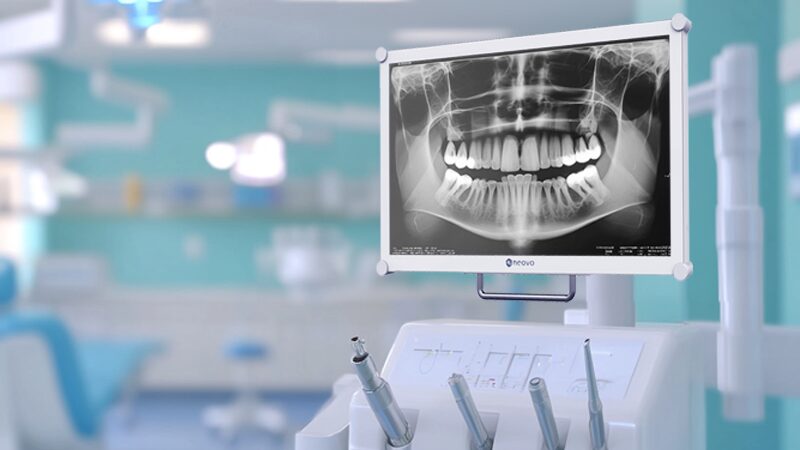
Clinical and Dental Environments: Provides the extreme clarity required for diagnostic imaging and DICOM calibration, whilst ensuring the sealed front panel can withstand continuous chemical disinfection.
Maritime and Transportation: Delivers essential sunlight readability for navigation bridges and resists the constant vibrations inherent in marine and rail environments.
Industrial and Automation: Protects critical control interfaces from dust, fluid ingress, and mechanical impacts on the factory floor.
Digital Signage and Kiosks: Ensures public-facing displays remain readable under direct sunlight and resilient against potential vandalism.
Conclusion
Optical bonding is not merely an optional enhancement; it is a structural necessity for hardware operating outside the standard office environment. By eliminating internal reflections, eradicating condensation risks, and significantly boosting physical durability, optical bonding ensures that professional displays perform reliably when failure is not an option.
For system integrators and engineers tasked with specifying hardware for demanding sectors, selecting displays engineered with optical bonding technology is the most effective strategy to guarantee long-term operational stability and lower the Total Cost of Ownership (TCO).





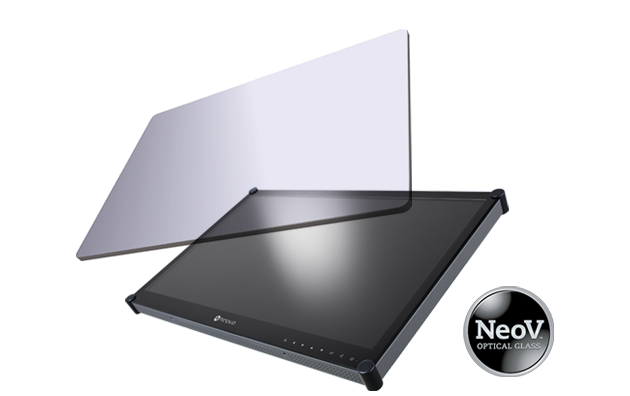 NeoV™ Optical Glass Screen
 Anti-Burn-in™ Technology