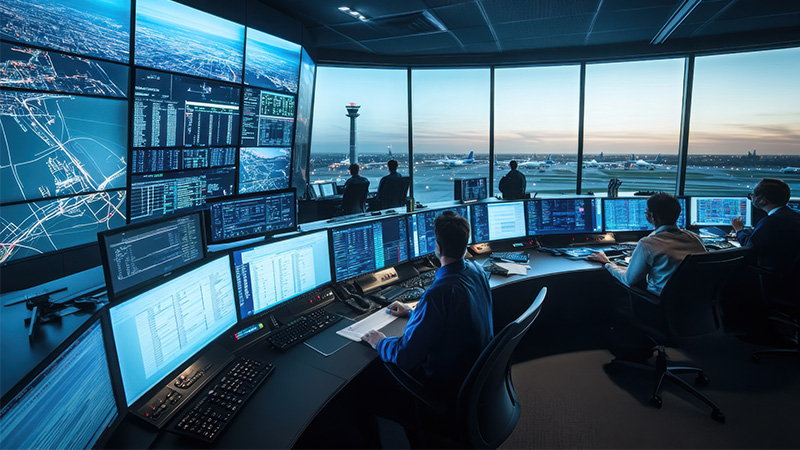
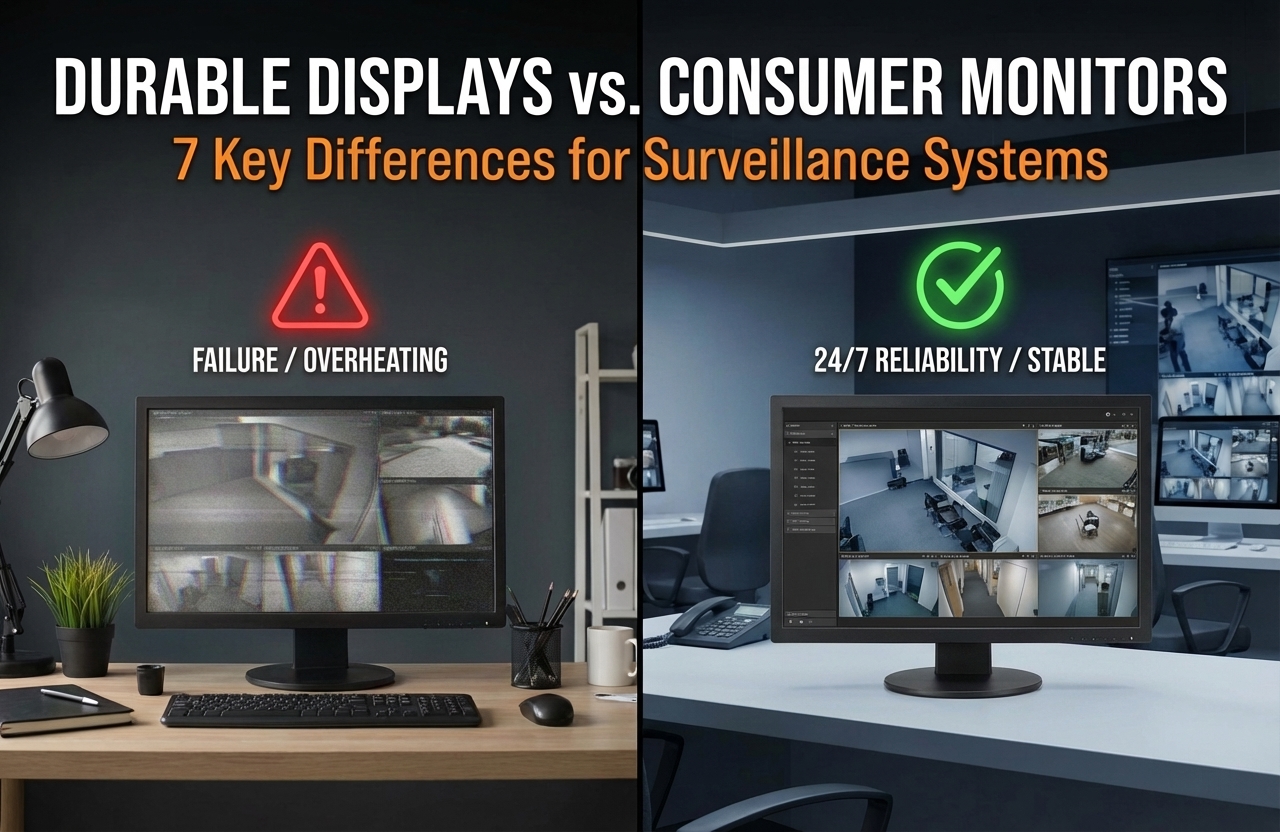
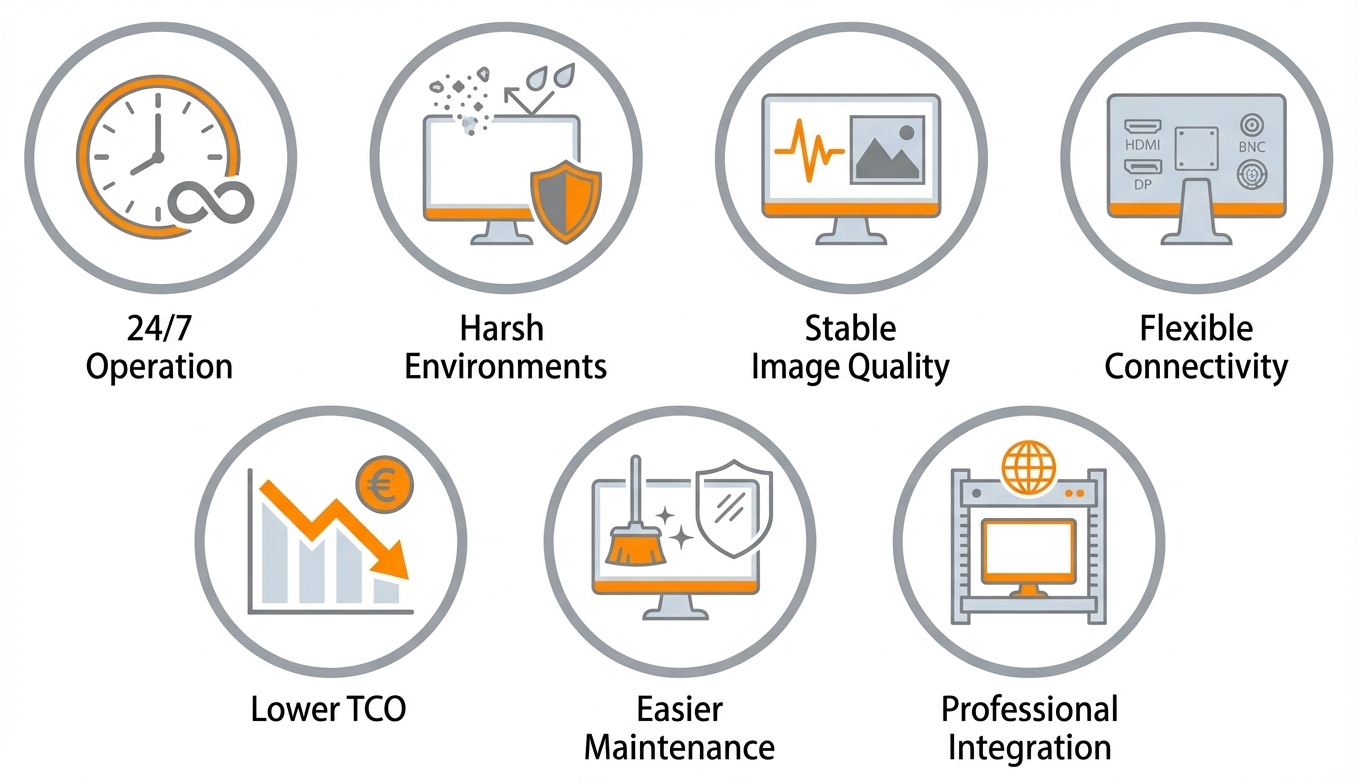
A durable display—often referred to as a commercial-grade or surveillance monitor—is designed for continuous 24/7 operation in demanding environments. Unlike consumer monitors, which are built for limited daily use, durable displays provide superior reliability, physical protection, and system integration.
For system integrators and organisations deploying surveillance systems, understanding the difference between durable displays and consumer monitors is critical to ensuring stable performance, reducing downtime, and achieving lower total cost of ownership across long-term operations.
Many surveillance systems fail not because of cameras, networks, or software—but because of the display.
At first glance, consumer monitors appear to be an economical initial choice. They are widely available, offer high resolution, and are suitable for general use. However, in real-world surveillance deployments—such as transportation hubs, industrial facilities, and control rooms—these monitors are fundamentally unequipped to handle continuous operation or harsh environmental conditions.
A common question is: can a consumer monitor be used for CCTV or surveillance systems?
The short answer is no—at least not for professional or 24/7 applications.
Using a consumer monitor in a critical environment often leads to:
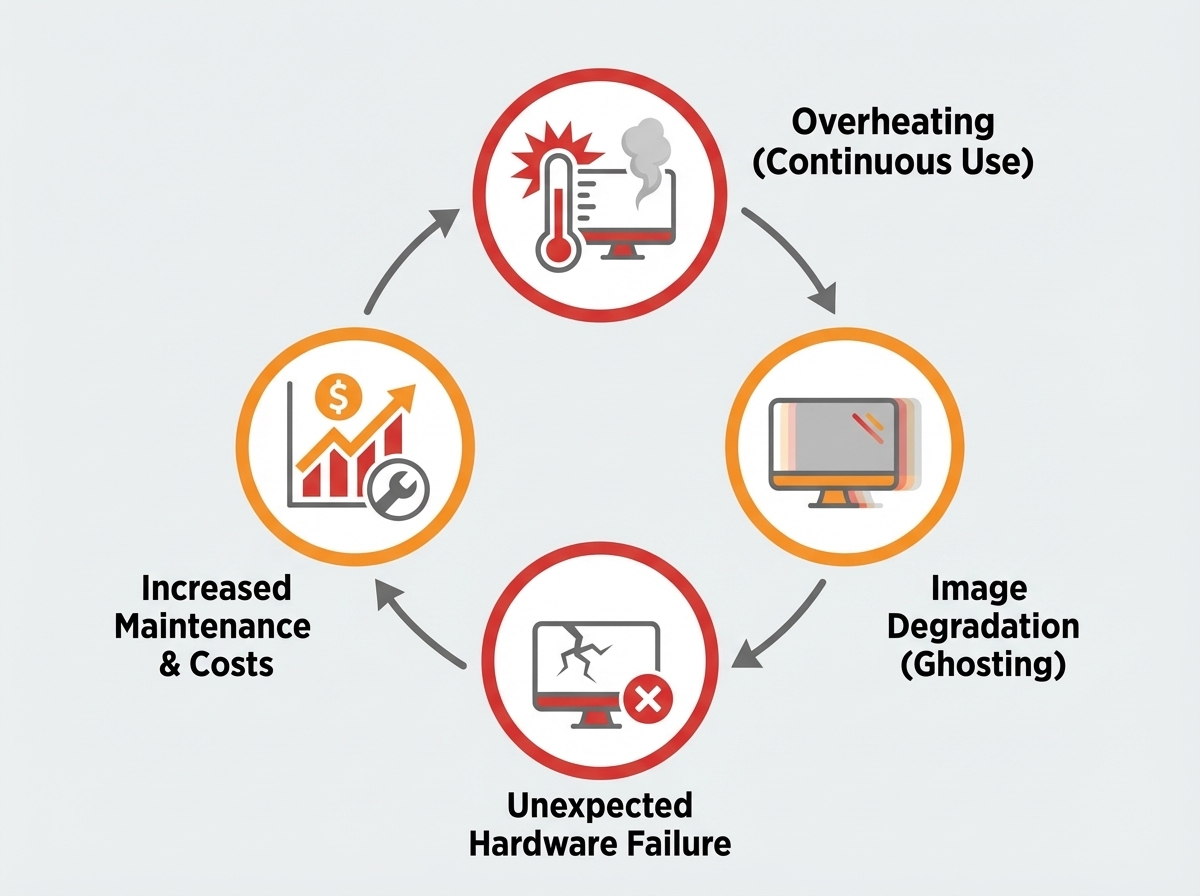
Understanding why these issues occur begins with examining how consumer monitors differ from durable displays.
Consumer monitors are designed primarily for home and office environments. They are built for intermittent use—typically 6 to 8 hours per day—in temperature-controlled and low-risk conditions.
While they may provide excellent image quality for everyday tasks, their design priorities focus on affordability and visual performance rather than structural durability or operational stability.
As a result, consumer monitors lack:
A durable display is engineered for professional environments where reliability, continuous operation, and environmental resistance are essential. These displays are designed to support 24/7 operation while maintaining consistent image performance and structural integrity over time.
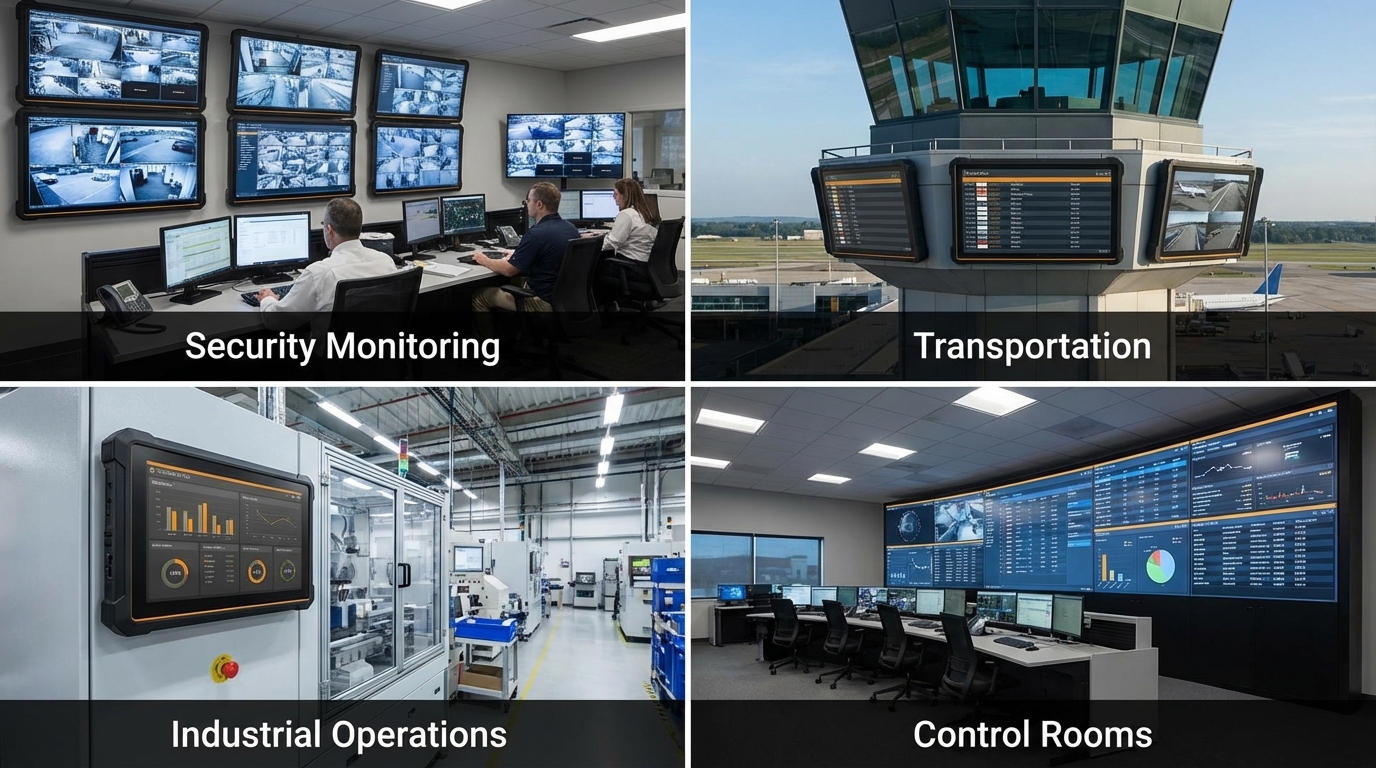
Durable displays are commonly used in:
Unlike consumer monitors, durable displays are built with long-term deployment in mind—ensuring that performance remains stable even under demanding physical conditions.
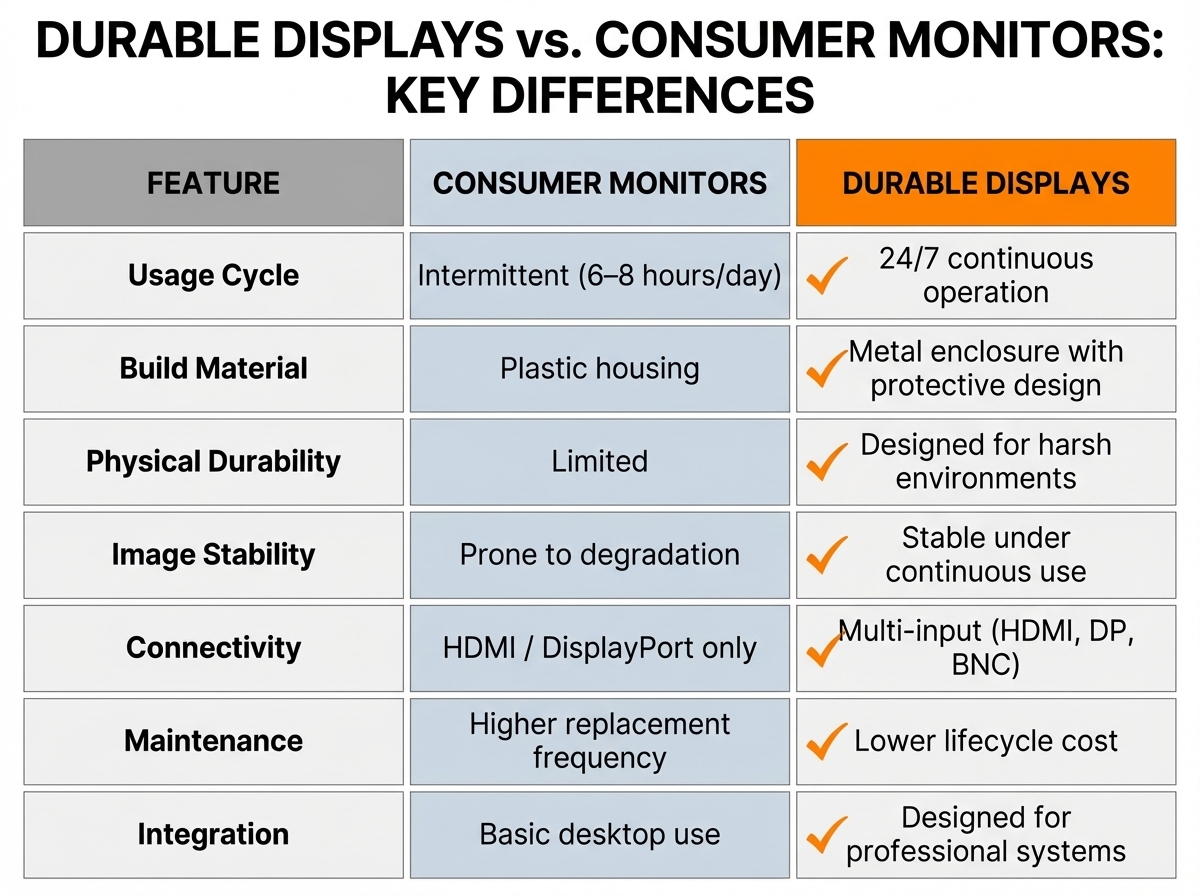
| Feature | Consumer Monitors | Durable Displays |
| Usage Cycle | Intermittent (6–8 hours/day) | 24/7 continuous operation |
| Build Material | Plastic housing | Metal enclosure with protective design |
| Physical Durability | Limited | Designed for harsh environments |
| Image Stability | Prone to degradation | Stable under continuous use |
| Connectivity | HDMI / DisplayPort only | Multi-input (HDMI, DP, BNC) |
| Maintenance | Higher replacement frequency | Lower lifecycle cost |
| Integration | Basic desktop use | Designed for professional systems |
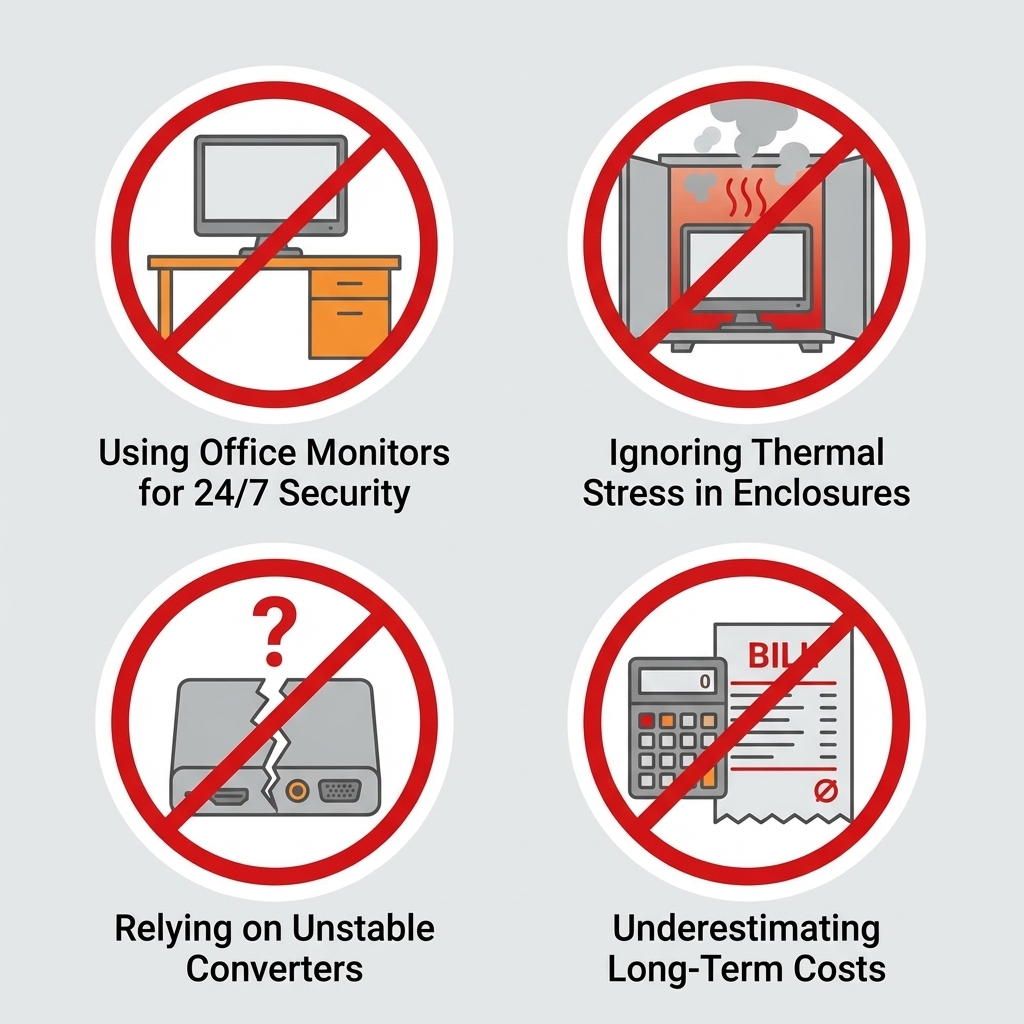
Many organisations underestimate the importance of the display when designing surveillance architecture. Common mistakes include:
These decisions inevitably lead to system instability, blind spots, and higher operational expenses.
Durable displays are essential in environments where reliability and continuous operation cannot be compromised. Typical use cases include:
Understanding the differences between consumer monitors and durable displays is the first step. For a deeper technical perspective on how system integrators evaluate reliability, deployment requirements, and long-term performance, read: How System Integrators Choose Durable Displays for Critical Environments
While consumer monitors may appear to be an economical initial option, they are not designed for professional surveillance environments. Durable displays provide the structural resilience, stability, and visual performance required for mission-critical operations. Choosing the right display is not simply a hardware decision—it is a strategic investment in system performance, operational continuity, and long-term cost efficiency.
Consumer monitors are not designed for continuous 24/7 operation and will likely fail prematurely due to thermal stress and component fatigue. Durable displays are strictly recommended for reliable, long-term surveillance performance.
A durable display is a professional-grade screen engineered for continuous operation. It features high MTBF ratings, environmental resistance (such as metal enclosures and protective glass), and active image retention prevention to ensure stable performance in real-world conditions.


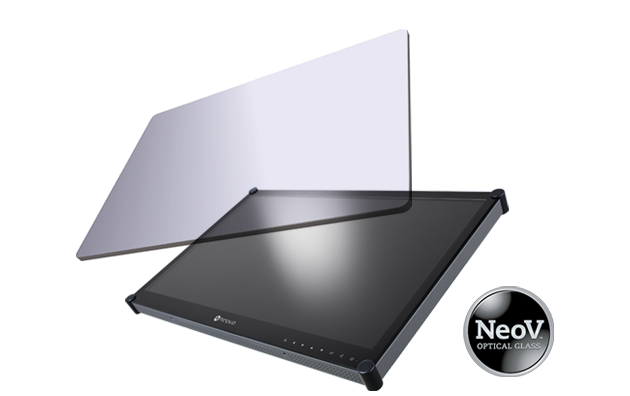 NeoV™ Optical Glass Screen
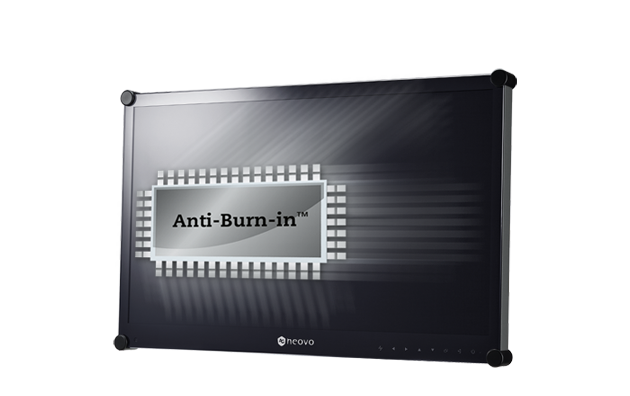 Anti-Burn-in™ Technology