

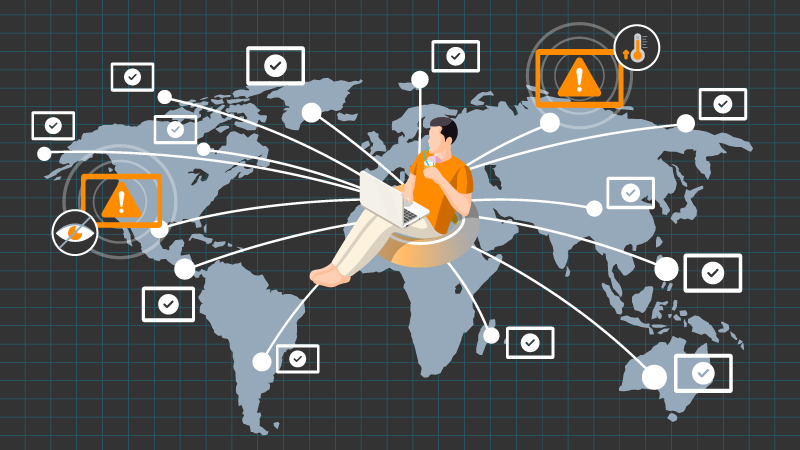
For system integrators, IT teams, and operations managers, installing displays is only the first milestone. The harder part begins after installation, when displays need to stay online, updated, visible, and manageable across every room, building, or location.
A small deployment can often be handled with manual checks. But once your display network grows across multiple stores, campuses, offices, classrooms, meeting rooms, or public areas, remote display management becomes a daily operational need.
That is where centralized display management becomes essential.
A content management system can help publish and schedule signage content. But not every display management need is about content. When a screen goes offline, an Android app needs to be installed, an input source needs to change, or a group of displays needs a scheduled power setting, teams need a centralized way to manage the display environment itself.
Most display projects look straightforward at the beginning. Displays are installed, content or collaboration tools are configured, and the system goes live.
Then the real operating questions begin:
These questions are not just technical details. They affect uptime, maintenance cost, customer experience, and the ability to scale.
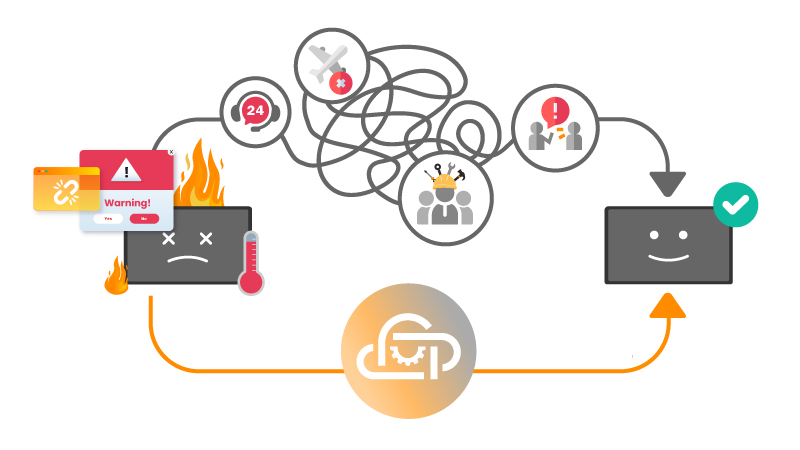
When teams cannot see or control their displays remotely, every small issue becomes harder to solve. A frozen screen, wrong input source, disconnected device, or missed schedule can quickly turn into a support ticket or an on-site service visit.
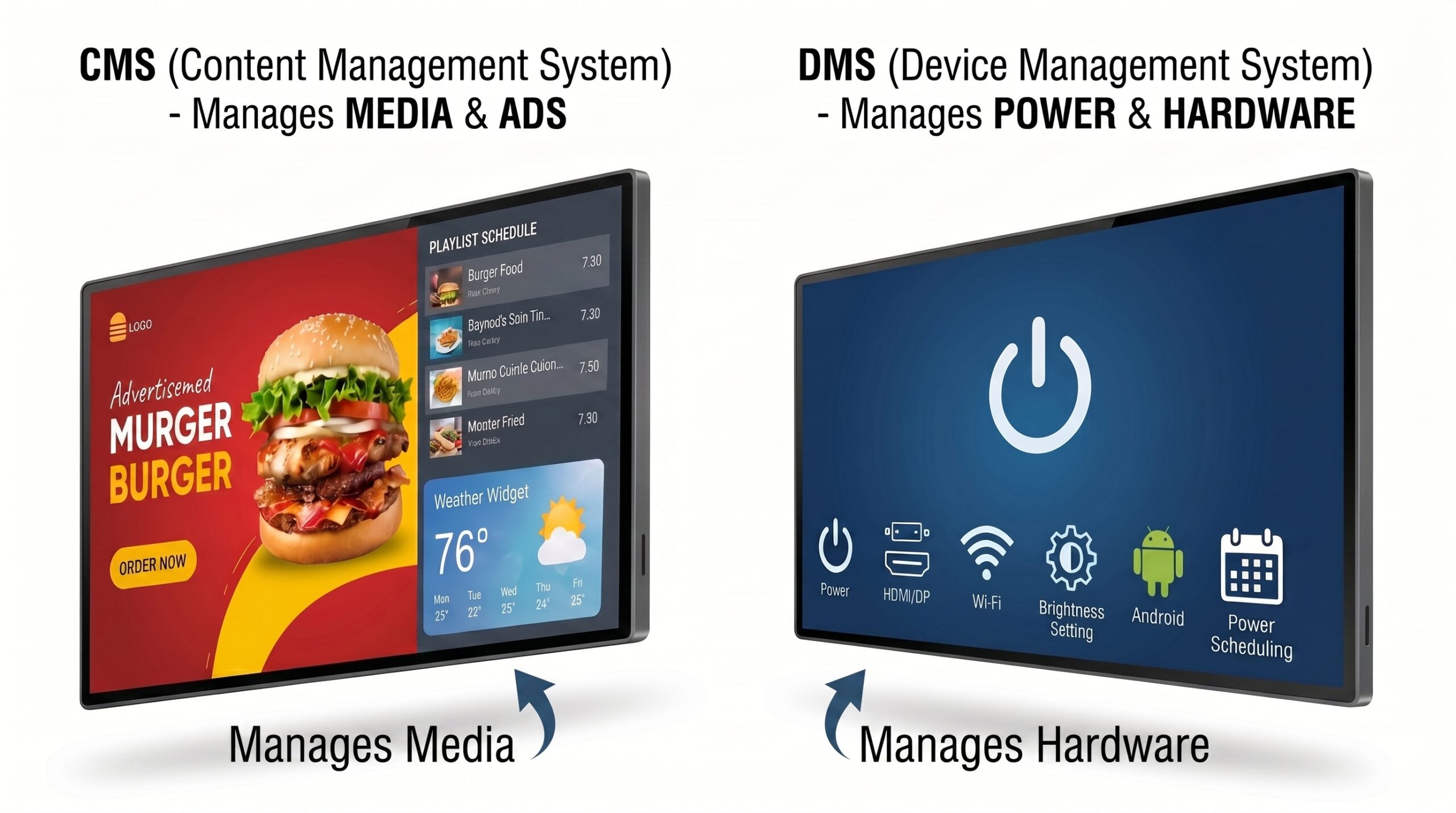
In digital signage projects, one common mistake is assuming that content management and device management are the same thing.
They are not.
A digital signage CMS is mainly built to manage what appears on the screen. It helps teams upload media, schedule playlists, update announcements, and manage content campaigns.
Device management focuses on the display environment. It helps teams monitor status, control display settings, organize devices, schedule operations, deploy apps, and troubleshoot issues remotely. This matters for both digital signage displays and Android-based interactive displays used in meeting rooms, classrooms, and collaboration spaces.
For a growing display network, both layers matter.
If your CMS says content has been published, that does not always mean the display is powered on, connected, showing the right input, or functioning correctly at the site. Without display-level visibility, IT and AV teams can still be left guessing.
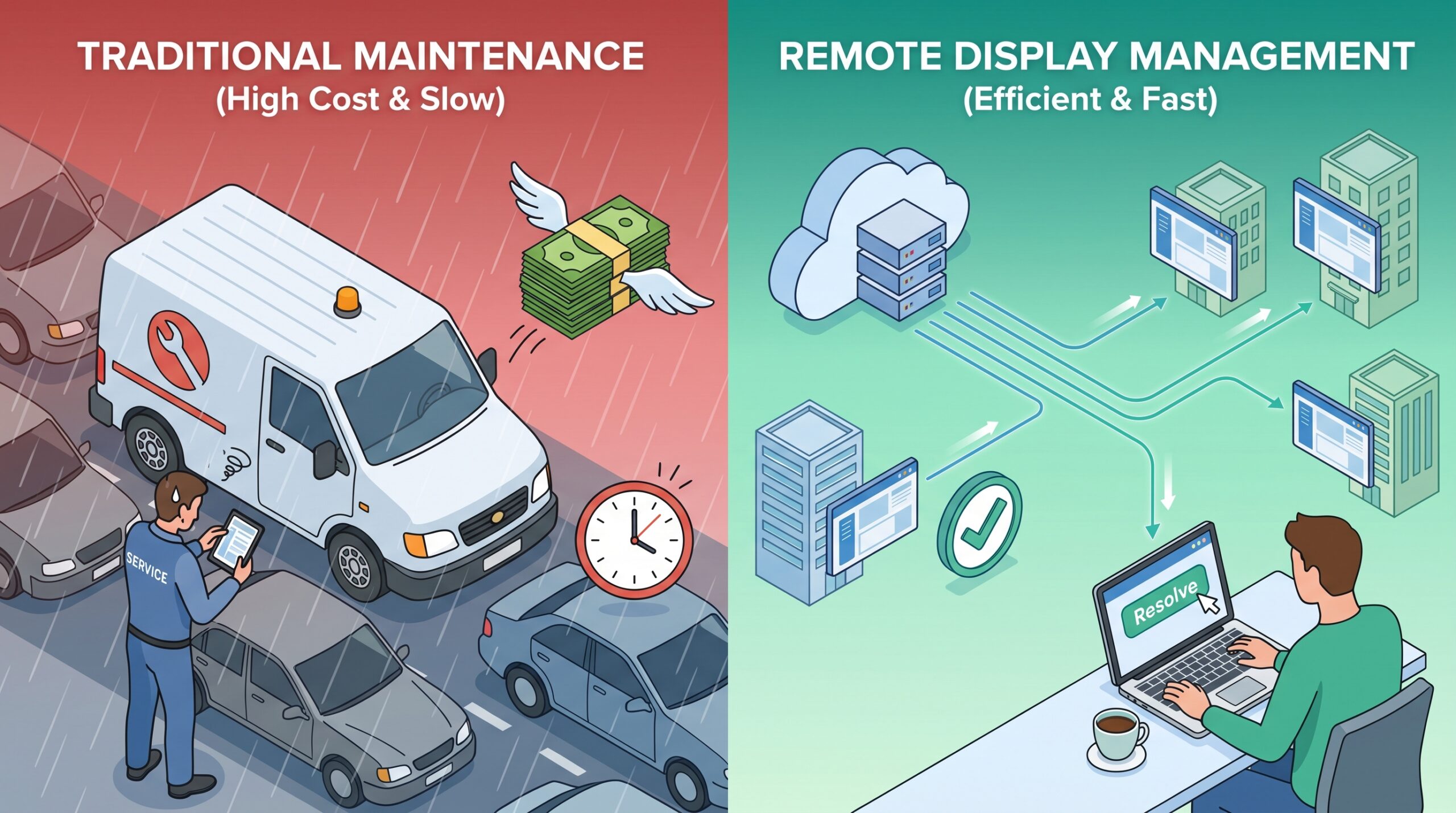
On-site maintenance is one of the biggest hidden costs in multi-location display operations.
When every issue requires someone to visit the site, support becomes slow and expensive. A simple adjustment can turn into travel time, labor cost, scheduling delays, and display downtime.
Remote display management helps reduce those unnecessary visits by giving teams a way to handle common tasks from a browser-based dashboard.
Examples include:
The goal is not to eliminate every service visit. Some issues will always require local support. But centralized display management helps teams resolve more tasks remotely and identify which problems truly need on-site attention.
When evaluating a display management platform, look beyond basic remote access. A scalable system should support the everyday workflows that IT teams, AV teams, and system integrators actually need.
Teams should be able to view connected displays from one dashboard, including their status, location, and grouping. This is especially important for multi-location rollouts where devices are spread across different sites.
Remote monitoring helps teams understand what is happening across the display network without waiting for someone at the site to report a problem. For signage, classroom, meeting room, and public information displays, this can reduce blind spots and improve response time.
A strong device management layer should make it possible to adjust common display settings remotely. This can include brightness, volume, input source, key lock settings, and other display controls depending on the supported device.
As the network grows, teams need a way to organize devices by location, use case, department, or customer. Groups and tags make it easier to apply actions to the right displays without managing each one individually.
Remote scheduling helps teams automate display operations, such as power on/off timing or input source switching. This can support more consistent operation while reducing manual work.
For Android-based displays, app management can help teams upload, install, and manage APKs remotely. This is useful when multiple signage displays, meeting room displays, or classroom displays need the same app environment without repeated manual installation.
As more people become involved in managing displays, access control becomes important. Role management helps teams assign the right level of control to administrators, operators, and support users.
Neovo Manager is AG Neovo’s web-based platform for managing compatible AG Neovo displays from a browser. It is designed to help teams monitor, control, organize, and maintain display networks without relying on manual adjustments for every task.
With Neovo Manager, teams can pair compatible AG Neovo displays and manage them through a centralized dashboard. This gives administrators a clearer view of connected devices and a faster way to handle routine operations.
Key capabilities include:
Neovo Manager currently supports selected AG Neovo Android displays, including the DS-Series, Meetboard 4, and Meetboard 4 Prime.
For teams already using compatible AG Neovo displays, Neovo Manager provides a practical way to move from manual device operation to centralized remote display management.
Neovo Manager is not positioned as a replacement for every digital signage CMS, collaboration app, or classroom workflow. Instead, it supports the device management layer around compatible AG Neovo Android displays.
That distinction matters.
Your CMS may manage content. Your meeting room or classroom apps may support collaboration. Neovo Manager helps manage the display environment. Together, these layers can support more scalable display operations:
For system integrators and IT teams, this separation can make the overall workflow easier to maintain. Content, workplace, and education teams can focus on the user experience, while technical teams have better tools to manage the display hardware and Android device environment.
Remote device management is especially useful when displays are spread across multiple locations, rooms, departments, or customer sites.
Examples include:
In each case, the challenge is similar: teams need a way to keep displays visible, organized, and manageable without depending on constant on-site support.
The success of a display project is not measured only by whether the screens turn on during installation. It is measured by whether the network can keep operating reliably over time.
As deployments grow, manual management becomes harder to sustain. More locations mean more devices, more settings, more user roles, more maintenance tasks, and more chances for small issues to interrupt the experience.
That is why remote display management should be part of the plan from the beginning.
For teams using compatible AG Neovo displays, Neovo Manager provides a web-based way to centralize remote monitoring, display control, scheduling, app management, and device organization.
Ready to simplify display management across locations?
Explore Neovo Manager and see how it helps teams manage compatible AG Neovo displays from one web-based dashboard.
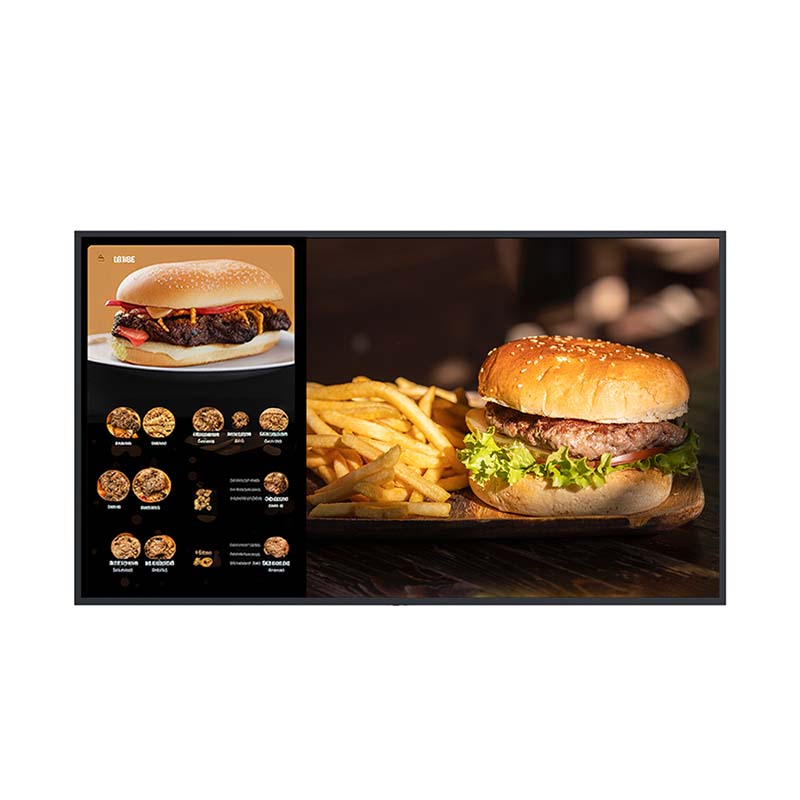
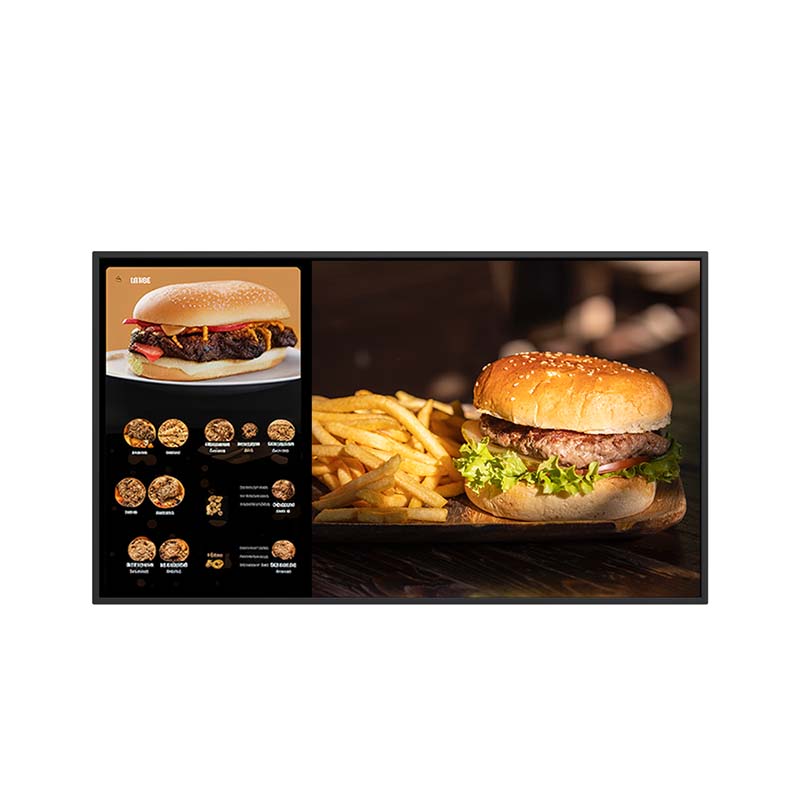


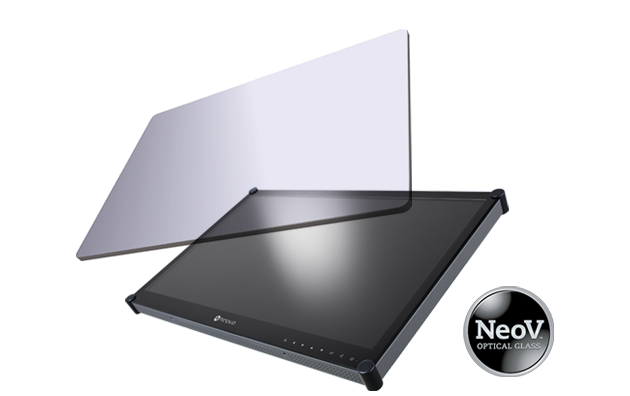 NeoV™ Optical Glass Screen
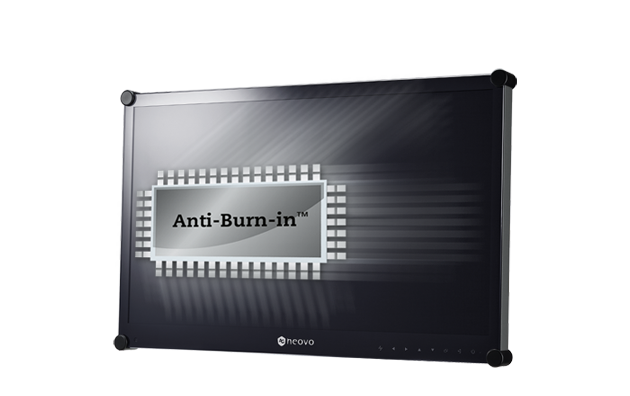 Anti-Burn-in™ Technology