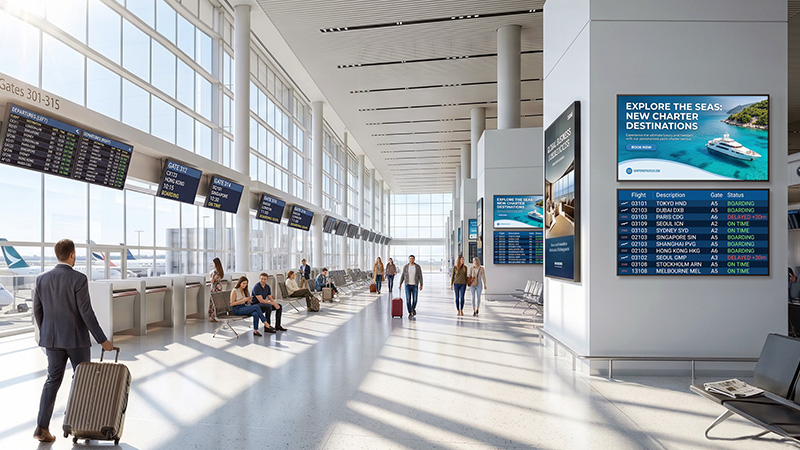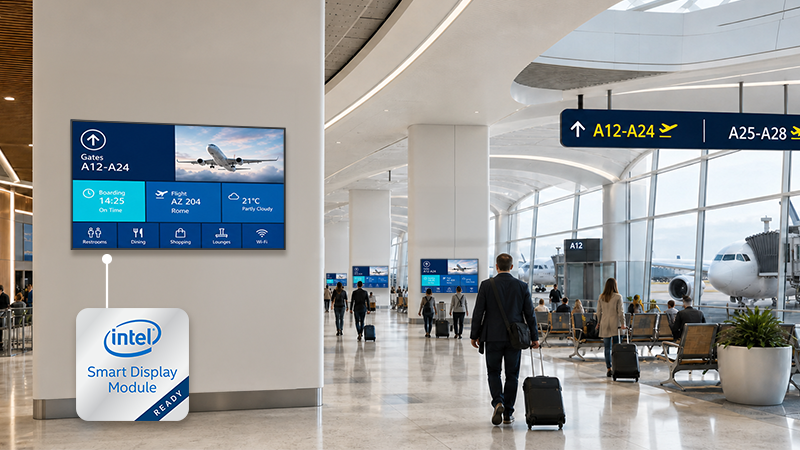

Large format displays are commonly used in digital signage projects where visibility, impact, and readability are critical. In environments such as retail stores, transportation hubs, corporate lobbies, and control rooms, screens must be large enough to deliver information clearly to audiences at different distances.
Choosing a large format display is not simply about selecting a bigger screen. Professional installations often require displays that can operate for long hours, maintain consistent brightness, support different mounting configurations, and remain reliable in demanding environments. Because of this, commercial large format displays are typically used instead of consumer televisions in enterprise digital signage systems.
This guide explains when large format displays should be used, what sizes and formats are available, and which features system integrators and IT professionals should consider when selecting displays for large-scale digital signage projects.
A large format display (LFD) generally refers to a commercial-grade LCD screen larger than 32 inches that is designed for professional and public applications. These displays are widely used in digital signage, corporate communication, monitoring systems, and public information networks.
Unlike consumer TVs, large format displays are built for continuous operation and installation in commercial environments. They often include stronger internal components, higher brightness panels, and structural features that support long-term reliability.
Large format displays are available in a wide range of sizes, typically from 32 inches up to 98 inches or more. The correct size depends heavily on the viewing distance, installation space, and the specific type of content being shown. In digital signage, the goal of using a commercial large format display is to ensure that information remains visible, readable, and stable even in massive or bustling environments.
Large format displays are usually chosen when standard monitors are not large enough to deliver the required visual impact. They are especially useful in environments where viewers are standing far from the screen, or where the display must immediately attract attention in a crowded space.
Typical situations where large format displays are recommended include:
In these environments, screens often operate for many hours every day and must remain stable under continuous use. Because of this, commercial-grade large format displays are consistently preferred over consumer TVs for professional digital signage installations.
Selecting the correct screen size is one of the most critical decisions in a large format display project. The ideal size depends directly on the distance between the viewer and the screen, as well as the complexity of the content being displayed.
Choosing the correct size helps ensure that content is readable, visually effective, and comfortable to view without causing eye strain.
Large format displays are available in different form factors to support a wide range of installation environments.
In professional digital signage installations, scaling up in size means scaling up the physical demands on the hardware. A massive screen must include features that support long operating hours, stable thermal performance, and easy system management.
Commercial large format displays are built to support extended usage, including 16/7 or 24/7 operation. Displays designed for continuous operation include symmetrical cooling systems and highly durable internal components to prevent the heat pooling that naturally occurs in very large chassis.
Large displays are frequently installed in bright indoor locations such as storefront windows and transportation terminals. In these environments, higher brightness levels (often 700 nits or more) are required. Commercial displays provide these high-brightness panels alongside anti-reflective treatments to guarantee readability under strong ambient light.
Digital signage often shows static content for long periods. On a massive 85-inch screen, image retention or burn-in becomes a highly visible and costly issue. Professional large format displays combat this with panel protection technologies. For example, commercial displays utilizing specialized solutions like AG Neovo’s patented Anti-Burn-in™ technology help maintain pristine image quality and protect the hardware investment in demanding 24/7 applications.
The larger the screen, the more susceptible it is to physical impacts in public environments. Commercial displays utilize stronger metal enclosures, reinforced glass, and secure mounting designs to improve structural durability—a critical requirement for transportation hubs and high-traffic retail spaces.
Many digital signage projects involve multiple large displays installed across different locations or mounted high up in difficult-to-reach places. In these systems, remote management is not just a convenience; it is a necessity.
Large format displays designed for professional use support remote monitoring and control through LAN, RS232, or web-based management platforms. This allows administrators to adjust settings, check device health, and manage displays without dispatching technicians to the site. Enterprise-grade displays seamlessly integrate with management tools like Neovo Contoller software, allowing IT teams to control multiple screens, easily configure complex video walls, and maintain stable operation across large networks.
Furthermore, some models feature integrated Android operating systems. Functioning as a complete all-in-one digital signage solution, these displays eliminate the need to mount and wire external media players behind heavy, large-format screens, drastically reducing installation complexity and potential points of failure.
Large format displays play an indispensable role in digital signage systems where content must be clearly visible in large architectural spaces or busy public environments. Selecting the right display involves far more than simply choosing the biggest screen available.
Screen size, installation form factor, operating hours, durability, and remote management capabilities all fundamentally dictate the long-term success of the system. Commercial large format displays are explicitly engineered to handle these strict requirements, providing the stable operation and features necessary for professional installations. By understanding when large format displays should be used and evaluating the right features, system integrators and IT professionals can ensure reliable, high-impact performance over time.

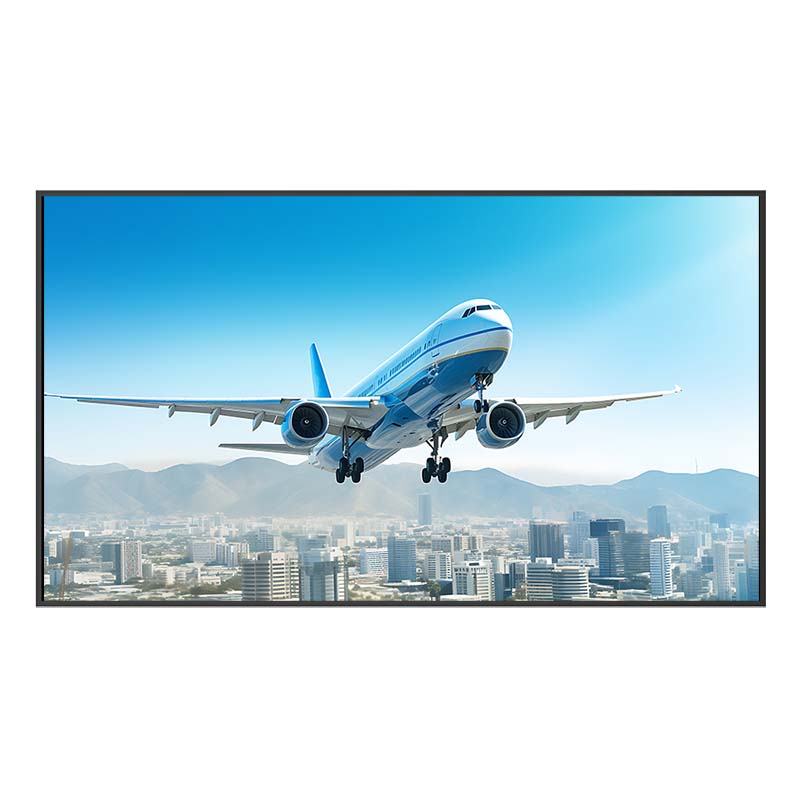


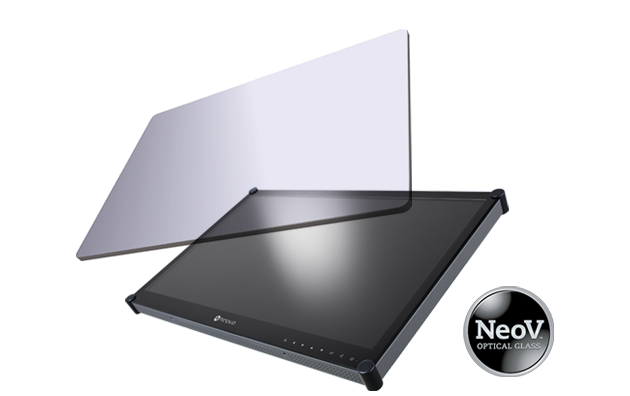 NeoV™ Optical Glass Screen
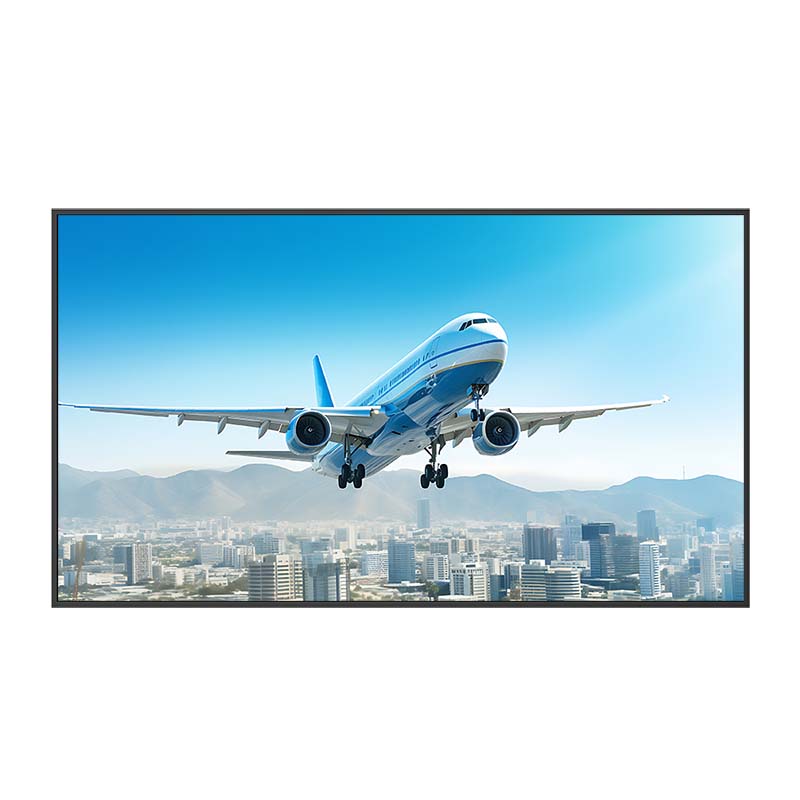
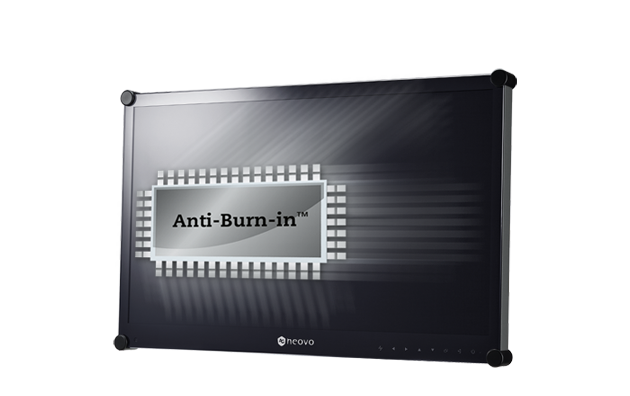 Anti-Burn-in™ Technology