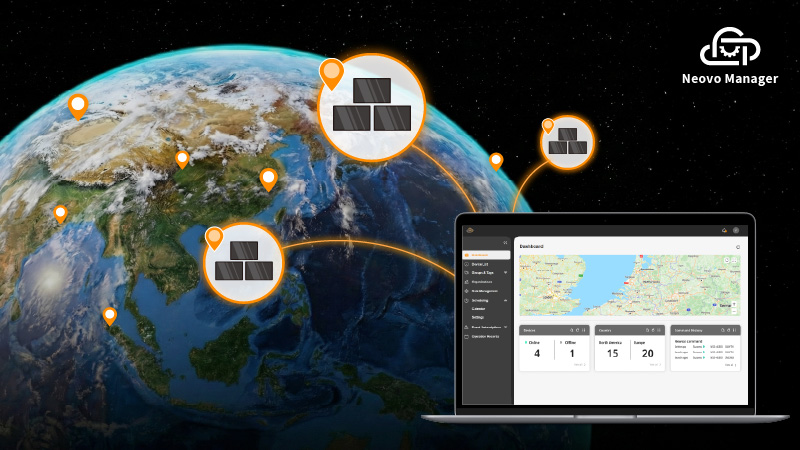
For system integrators (SIs) and IT administrators, winning a multi-location signage project is a great achievement. However, the real challenge is not hanging the screens on the wall—it’s keeping them running reliably over time.
When managing dozens or hundreds of displays across different cities, problems rarely happen one at a time. Without native display device management, teams quickly lose visibility over device status, maintenance needs, and daily operations. What starts as a simple deployment quickly turns into a long-term operational burden.
Here is why scaling digital signage requires more than just good hardware, and how choosing the right hardware-software ecosystem protects your project’s operational efficiency.
Managing a few displays in a single building is easy enough with manual checks. But when your deployment scales across multiple locations, the environment changes completely. Each device faces different network conditions, and every failure demands a rapid response.
One of the most common mistakes in large deployments is confusing Content Management Systems (CMS) with Device Management Systems (DMS). A CMS is great for scheduling content and updating advertisements. However, when a screen overheats, the firmware crashes, or a network interface drops, your CMS is entirely blind. Without a dedicated DMS, your IT team has no way to monitor or control the physical hardware.
When a display freezes and cannot be fixed remotely, the only option is to send a technician on-site. In multi-location projects, these continuous “truck rolls” are the biggest hidden drain on SI profitability. Real situations often include:
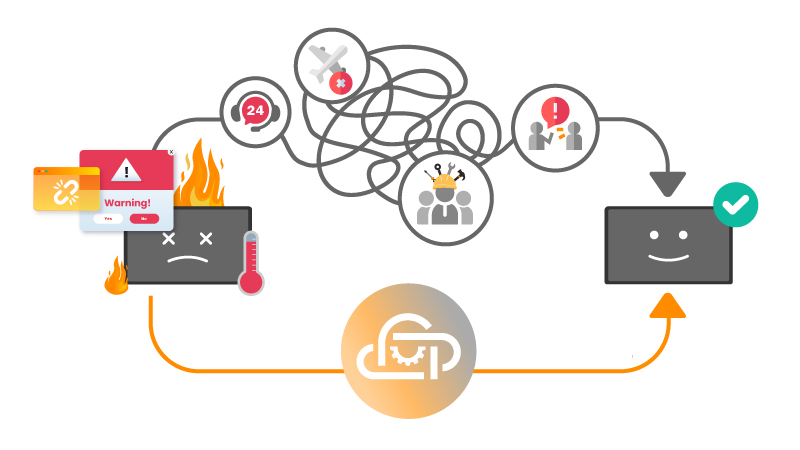
A problem that could have been solved remotely in two minutes turns into a full-day service trip, severely impacting your operational efficiency.
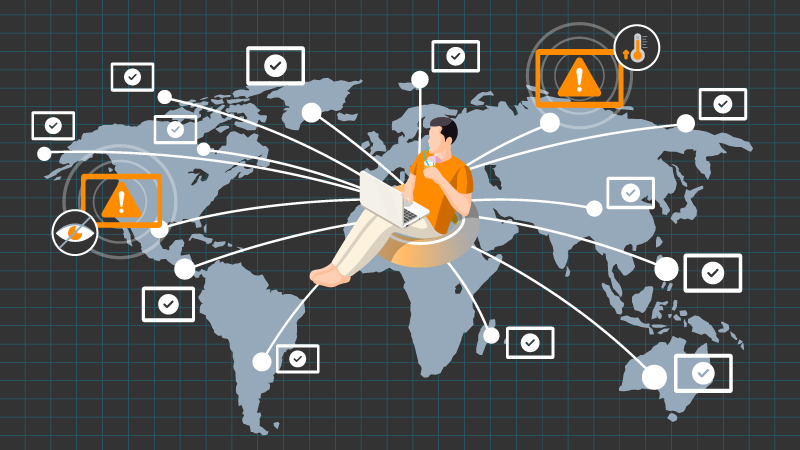
When digital signage is spread across many locations, lacking real-time hardware visibility means problems are discovered too late—often when the customer complains first. Typical blind spots include devices going offline unnoticed, players freezing without triggering alerts, and performance slowly degrading over time. This forces your maintenance team to constantly react to emergencies rather than preventing them.
To solve these issues, many teams attempt to patch third-party remote management software onto standard commercial displays. This creates a “Frankenstein” setup with significant limitations.
Because third-party software rarely communicates perfectly with the display’s core hardware, control remains superficial. You might see if a screen is online, but you cannot execute deep, firmware-level commands. Every time there is an OS update or network shift, compatibility issues arise, leading to vendor finger-pointing where the hardware maker blames the software, and vice versa.
When deployments grow to dozens of devices, the key is having a system that supports daily operations without increasing the workload. This requires native hardware-software integration. For SIs, an effective device management system must offer:
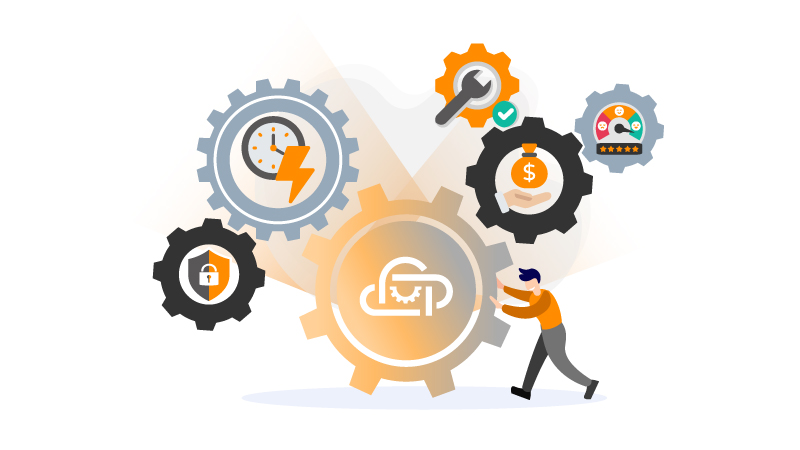
As the number of installations increases, maintenance must move from manual work to system-based management. You need a platform where hardware and software are designed by the same team, ensuring maximum uptime and zero compatibility headaches.
This is exactly why large-scale projects rely on the AG Neovo ecosystem. By choosing AG Neovo NSD or IFP series displays, you unlock the power of Neovo Manager.
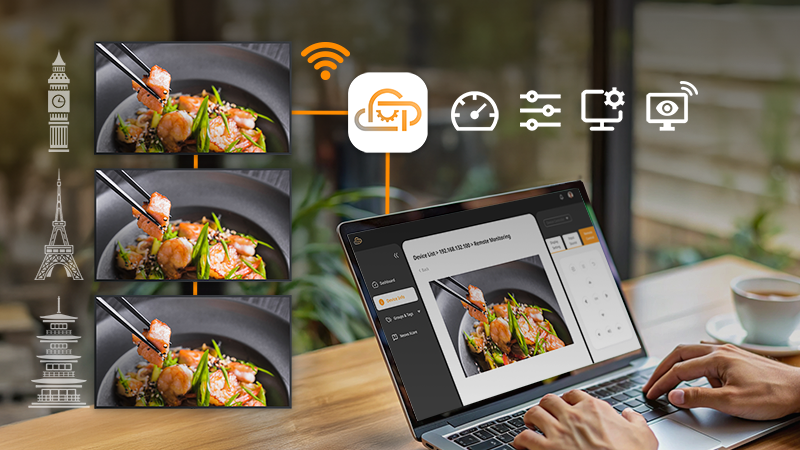
Neovo Manager provides centralized monitoring, deep remote control, and powerful automation in a single platform purpose-built for the hardware it manages. With these capabilities, routine checks and emergency troubleshooting are handled remotely.
Managing multi-location signage becomes difficult not because the devices are overly complex, but because fragmented operations become impossible to control. Without centralized monitoring and true remote capabilities, your maintenance workload will multiply with every new device installed.
For system integrators, the key to scaling deployments without destroying your profit margins is prioritizing long-term management from day one. By adopting a native ecosystem like AG Neovo displays paired with Neovo Manager, your multi-location networks will remain stable, efficient, and fully manageable—no matter how large they grow.
Ready to eliminate unnecessary truck rolls and scale your signage projects effortlessly?
Contact us to explore the Neovo Manager ecosystem and book a live demo today.


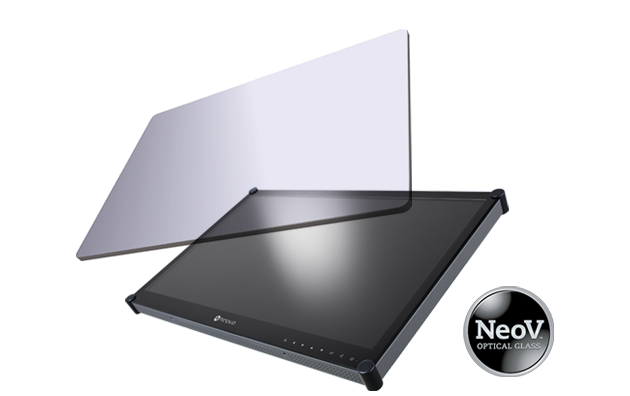 NeoV™ Optical Glass Screen
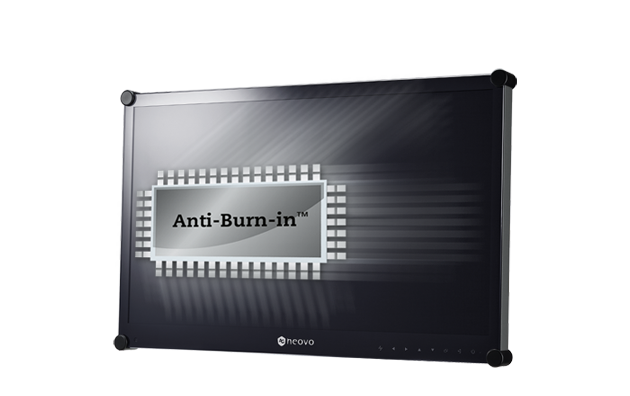 Anti-Burn-in™ Technology